
Umrah has no long list of compulsory duas. A handful of moments have words from the Prophet: the Talbiyah, the takbir at the Black Stone, “Rabbana atina” between the Yemeni Corner and the Black Stone, and the dhikr on Safa and Marwah. Everywhere else, make your own dua, in your own language.
This page goes through Umrah in order and gives, for each step, either the verified wording with its Arabic, transliteration, meaning and source, or a plain statement that there is no fixed dua. The Arabic is copied from sunnah.com and quran.com, not typed from memory.
If you are preparing for your first Umrah, this is the page to print or save to your phone before you leave. It covers the words, not the full method of the rites, and it does not give rulings: where the schools of law differ, it says so and leaves the answer to your scholar or your group’s imam. If you have not chosen dates yet, our Umrah packages page lists current departures from the US and Canada.
Every Step at a Glance
| Step | What to say | Fixed wording? | Source |
|---|---|---|---|
| Setting out | The travel dua | Yes | Sahih Muslim 1342 |
| Entering Ihram | Intention, then the Talbiyah | Talbiyah: yes | Sahih al-Bukhari 1549 |
| Entering the masjid | Dua for entering a mosque | Yes | Sahih Muslim 713 |
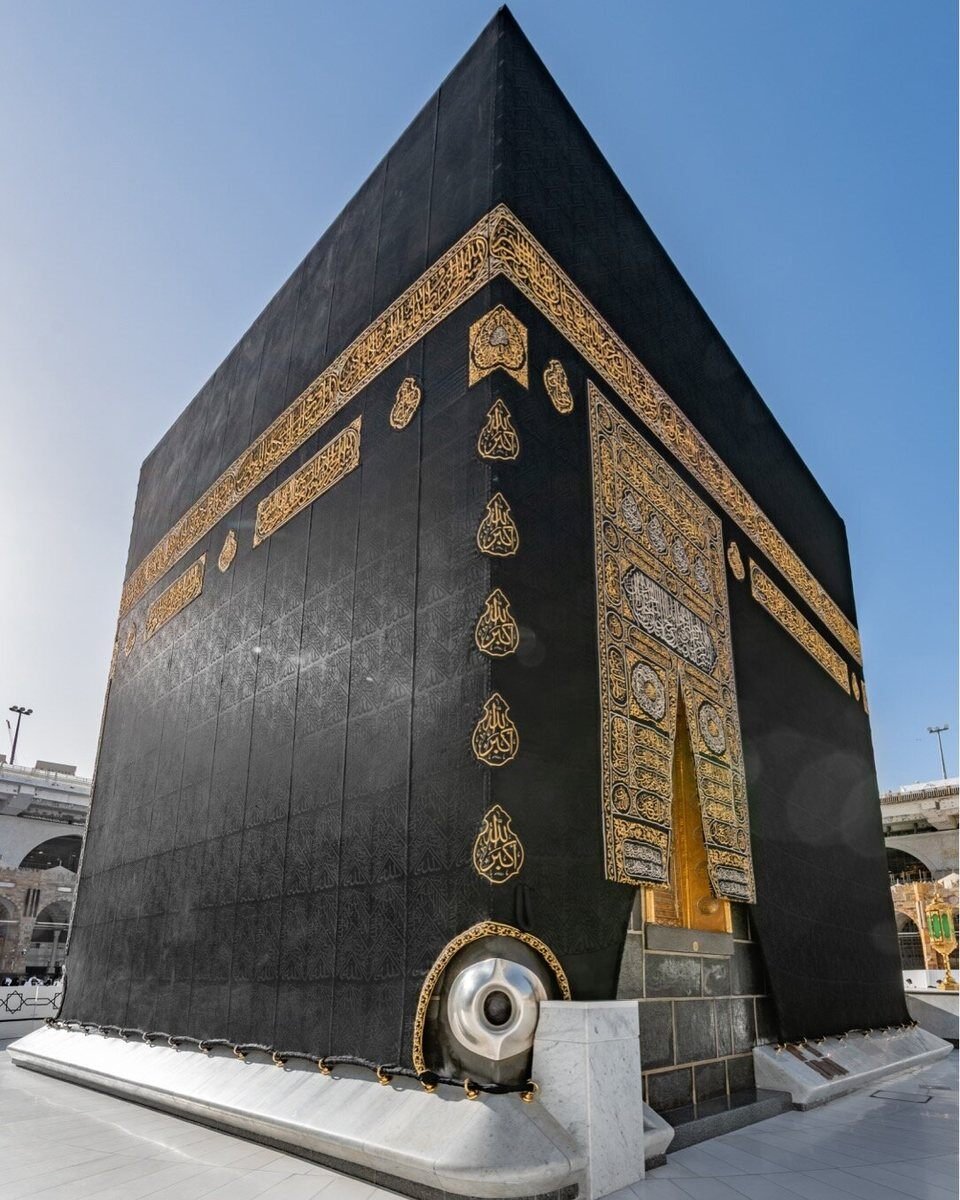
| First sight of the Kaaba | Your own dua | No verified wording | — |
| Black Stone, each circuit | Allahu akbar | Yes (takbir) | Sahih al-Bukhari 1613 |
| During the circuits | Any dua, dhikr or Qur’an | No | — |
| Yemeni Corner to Black Stone | Rabbana atina fid-dunya hasanah… | Yes | Abu Dawud 1892; Qur’an 2:201 |
| Maqam Ibrahim | Qur’an 2:125, then two rak’ahs | Yes (verse) | Sahih Muslim 1218 |
| Zamzam | Your own dua | No | Ibn Majah 3062 |
| Approaching Safa | Qur’an 2:158 and “Abda’u bima bada’a Allahu bihi” | Yes | Sahih Muslim 1218 |
| On Safa and Marwah | Takbir, tahlil, then your dua, three times | Yes | Sahih Muslim 1218; Abu Dawud 1905 |
| Walking between them | Any dua or dhikr | No | — |
| Hair | No set dua | No | — |
Swipe the table sideways to see every column.
Setting Out on the Journey
When the Prophet (peace be upon him) mounted his camel to set out on a journey, he said “Allahu akbar” three times and then this dua, which begins with words from the Qur’an (43:13–14). You can say it as the plane starts to move.
سُبْحَانَ الَّذِي سَخَّرَ لَنَا هَذَا وَمَا كُنَّا لَهُ مُقْرِنِينَ وَإِنَّا إِلَى رَبِّنَا لَمُنْقَلِبُونَ اللَّهُمَّ إِنَّا نَسْأَلُكَ فِي سَفَرِنَا هَذَا الْبِرَّ وَالتَّقْوَى وَمِنَ الْعَمَلِ مَا تَرْضَى اللَّهُمَّ هَوِّنْ عَلَيْنَا سَفَرَنَا هَذَا وَاطْوِ عَنَّا بُعْدَهُ اللَّهُمَّ أَنْتَ الصَّاحِبُ فِي السَّفَرِ وَالْخَلِيفَةُ فِي الأَهْلِ اللَّهُمَّ إِنِّي أَعُوذُ بِكَ مِنْ وَعْثَاءِ السَّفَرِ وَكَآبَةِ الْمَنْظَرِ وَسُوءِ الْمُنْقَلَبِ فِي الْمَالِ وَالأَهْلِ
Subhanalladhi sakhkhara lana hadha wa ma kunna lahu muqrinin, wa inna ila rabbina lamunqalibun. Allahumma inna nas’aluka fi safarina hadhal-birra wat-taqwa, wa minal-‘amali ma tarda. Allahumma hawwin ‘alayna safarana hadha watwi ‘anna bu’dah. Allahumma antas-sahibu fis-safari wal-khalifatu fil-ahl. Allahumma inni a’udhu bika min wa’tha’is-safari wa ka’abatil-manzari wa su’il-munqalabi fil-mali wal-ahl.
Meaning (sunnah.com translation): “Hallowed is He Who subdued for us this (ride) and we were not ourselves powerful enough to use It as a ride, and we are going to return to our Lord. O Allah, we seek virtue and piety from Thee in this journey of ours and the act which pleaseth Thee. O Allah, lighten this journey of ours, and make its distance easy for us. O Allah, Thou art (our) companion during the journey, and guardian of (our) family. O Allah, I seek refuge with Thee from hardships of the journey, gloominess of the sights, and finding of evil changes in property and family on return.”
Source: Sahih Muslim 1342.
Entering Ihram: Intention and Talbiyah
Ihram begins with the intention to perform Umrah, made at or before the Miqat. The intention is in the heart. Whether it should also be spoken, and in what words, is taught differently between the schools; many teachers suggest saying “Labbayka Allahumma ‘umrah” (“Here I am, O Allah, for Umrah”). When the Prophet entered Ihram for Hajj and Umrah together, Anas reported him saying “Labbayka ‘umratan wa hajjan” (Sahih Muslim 1251). If you are flying in, read our page on where to enter Ihram on a flight from the US before you travel.
لَبَّيْكَ اللَّهُمَّ لَبَّيْكَ، لَبَّيْكَ لاَ شَرِيكَ لَكَ لَبَّيْكَ، إِنَّ الْحَمْدَ وَالنِّعْمَةَ لَكَ وَالْمُلْكَ، لاَ شَرِيكَ لَكَ
Labbayka Allahumma labbayk, labbayka la sharika laka labbayk, innal-hamda wan-ni’mata laka wal-mulk, la sharika lak.
Meaning (sunnah.com translation): “I respond to Your call O Allah, I respond to Your call, and I am obedient to Your orders, You have no partner, I respond to Your call All the praises and blessings are for You, All the sovereignty is for You, And You have no partners with you.”
Source: Sahih al-Bukhari 1549, from ‘Abdullah ibn ‘Umar; also Sahih Muslim 1184.
Repeat the Talbiyah often from entering Ihram until you begin Tawaf. Men usually say it aloud; many scholars teach women to say it more quietly. On when exactly to stop, scholars commonly say at the start of Tawaf; the hadith often quoted for this (Sunan Abi Dawud 1817, Jami’ at-Tirmidhi 919) is graded weak on sunnah.com, and Abu Dawud himself notes it was also transmitted as Ibn ‘Abbas’s own statement. Ask your imam which view your school follows.
Entering Masjid al-Haram
There is no special dua for entering the Haram in Makkah beyond the dua for entering any mosque, which the Prophet taught.
اللَّهُمَّ افْتَحْ لِي أَبْوَابَ رَحْمَتِكَ
Allahumma-ftah li abwaba rahmatik. “O Allah! open for me the doors of Thy mercy.”
اللَّهُمَّ إِنِّي أَسْأَلُكَ مِنْ فَضْلِكَ
Allahumma inni as’aluka min fadlik. When leaving: “O Allah! I beg of Thee Thy Grace.”
Source: Sahih Muslim 713 (sunnah.com translation).
First sight of the Kaaba. Many booklets print a special dua for this moment. We have not included one, because we could not trace a fixed wording to a hadith we were able to verify. It is a good moment for your own dua; ask your imam if you want a specific wording.
Tawaf: the Black Stone, the Circuits, the Yemeni Corner
At the Black Stone. Ibn ‘Abbas reported that the Prophet performed Tawaf on a camel and, “every time he came in front of the Corner (having the Black Stone), he pointed towards it with something he had with him and said Takbir” (Sahih al-Bukhari 1613). So at the start of each circuit, face the Black Stone, point towards it with your right hand if you cannot reach it, and say Allahu akbar.
During the seven circuits. There is no fixed dua for each circuit. Say any dua, dhikr or Qur’an you know, in Arabic or your own language. This is where your written list of people and needs is most useful.
رَبَّنَا آتِنَا فِي الدُّنْيَا حَسَنَةً وَفِي الآخِرَةِ حَسَنَةً وَقِنَا عَذَابَ النَّارِ
Rabbana atina fid-dunya hasanatan wa fil-akhirati hasanatan wa qina ‘adhaban-nar.
Meaning (Qur’an 2:201, Sahih International on quran.com): “Our Lord, give us in this world [that which is] good and in the Hereafter [that which is] good and protect us from the punishment of the Fire.”
Source: ‘Abdullah ibn as-Sa’ib heard the Prophet say this “between the two corners” (Sunan Abi Dawud 1892, graded hasan by al-Albani on sunnah.com). The words are Qur’an 2:201.
The Yemeni Corner (Rukn al-Yamani) is the corner just before the Black Stone. If you are being moved along quickly and only manage the dua once or twice, that is fine; it is not a condition of Tawaf.
Maqam Ibrahim and Zamzam
After the seventh circuit, the Prophet went to the Maqam Ibrahim and recited part of Qur’an 2:125, then prayed two rak’ahs with the Maqam between himself and the Kaaba. The narrator of the long hadith describing his pilgrimage reports that in those two rak’ahs he recited Surah al-Kafirun and Surah al-Ikhlas (Sahih Muslim 1218).
وَٱتَّخِذُوا۟ مِن مَّقَامِ إِبْرَٰهِـۧمَ مُصَلًّى
Wattakhidhu min maqami Ibrahima musalla.
Meaning (Qur’an 2:125, Sahih International on quran.com): “And take, [O believers], from the standing place of Abraham a place of prayer.”
Source: Sahih Muslim 1218; Qur’an 2:125.
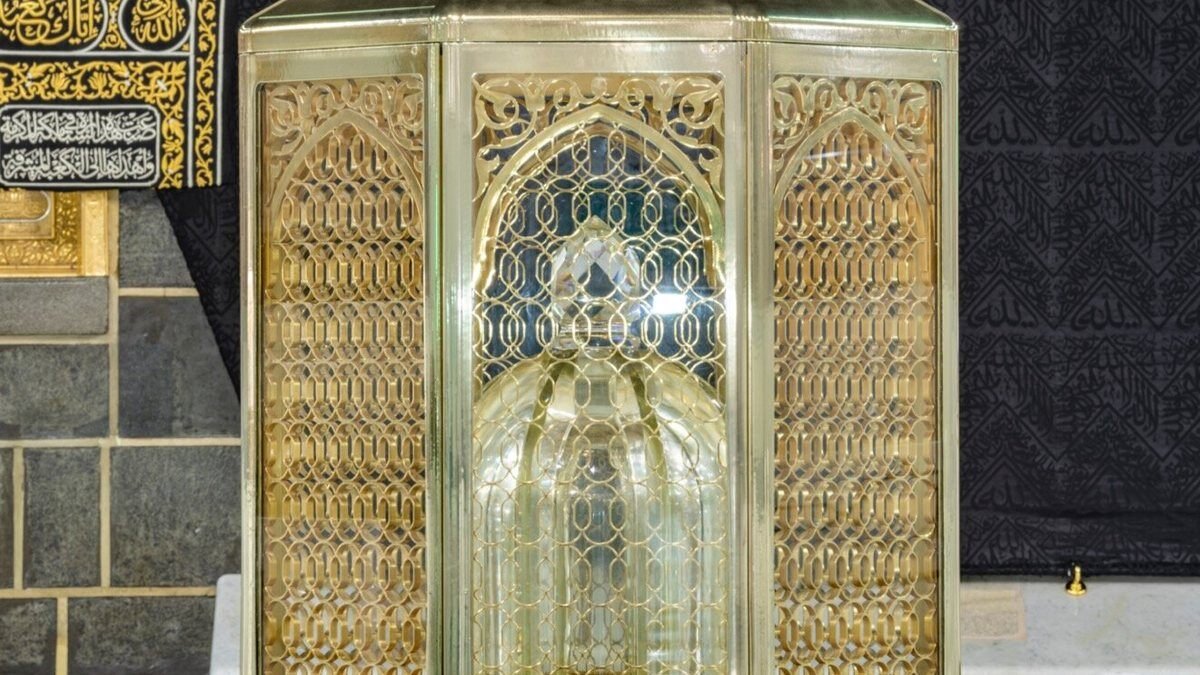
Zamzam. Jabir reported the Prophet saying, “The water of Zamzam is for whatever it is drunk for” (Sunan Ibn Majah 3062, graded hasan by Darussalam on sunnah.com). We could not verify a fixed dua for drinking it; drink with your own intention and dua.
Sa’i: Safa and Marwah
The long hadith of Jabir describes exactly what the Prophet said here. As he approached Safa he recited the opening of Qur’an 2:158 and said “I begin with what Allah (has commanded me) to begin.” He climbed Safa until he could see the House, faced the qiblah, declared Allah’s oneness and greatness, said the words below, and made dua between them, three times. He did the same on Marwah (Sahih Muslim 1218).
إِنَّ ٱلصَّفَا وَٱلْمَرْوَةَ مِن شَعَآئِرِ ٱللَّهِ
Innas-Safa wal-Marwata min sha’a’irillah. “Indeed, as-Safa and al-Marwah are among the symbols of Allah” (Qur’an 2:158, Sahih International on quran.com).
أَبْدَأُ بِمَا بَدَأَ اللَّهُ بِهِ
Abda’u bima bada’a Allahu bihi. “I begin with what Allah (has commanded me) to begin” (sunnah.com translation).
Source: Sahih Muslim 1218; Qur’an 2:158.
لاَ إِلَهَ إِلاَّ اللَّهُ وَحْدَهُ لاَ شَرِيكَ لَهُ لَهُ الْمُلْكُ وَلَهُ الْحَمْدُ يُحْيِي وَيُمِيتُ وَهُوَ عَلَى كُلِّ شَىْءٍ قَدِيرٌ لاَ إِلَهَ إِلاَّ اللَّهُ وَحْدَهُ أَنْجَزَ وَعْدَهُ وَنَصَرَ عَبْدَهُ وَهَزَمَ الأَحْزَابَ وَحْدَهُ
La ilaha illallahu wahdahu la sharika lah, lahul-mulku wa lahul-hamd, yuhyi wa yumit, wa huwa ‘ala kulli shay’in qadir. La ilaha illallahu wahdah, anjaza wa’dah, wa nasara ‘abdah, wa hazamal-ahzaba wahdah.
Meaning (adapted from the sunnah.com translation of Sahih Muslim 1218): “There is no god but Allah, One, there is no partner with Him. His is the Sovereignty, to Him praise is due, [He gives life and causes death,] and He is Powerful over everything. There is no god but Allah alone, Who fulfilled His promise, helped His servant and routed the confederates alone.”
Source: Sahih Muslim 1218. The Arabic shown is the wording in Sunan Abi Dawud 1905 (graded sahih by al-Albani on sunnah.com), which includes “yuhyi wa yumit”; Muslim’s wording does not. Say it with “Allahu akbar”, make your own dua, and repeat three times.
Walking between Safa and Marwah. There is no fixed dua for the seven lengths. Booklets often print “Rabbighfir warham” or a different dua for each length; we could not verify those as words of the Prophet in the collections we checked, so we have not printed them as Sunnah. Any dua or dhikr is fine. Men usually walk faster between the green lights, which mark the stretch where, in the same hadith, the Prophet ran in the bottom of the valley.
Shaving or Shortening the Hair
There is no set dua for this step. What the hadith does record is the Prophet’s dua for those who shave: اللَّهُمَّ ارْحَمِ الْمُحَلِّقِينَ (Allahumma-rham al-muhalliqin), “O Allah! Be merciful to those who have their head shaved.” He repeated it, and when the people asked about those who shorten their hair, he included them too (Sahih al-Bukhari 1727). Women shorten a small length of hair rather than shave. With this, Umrah is complete.
What About the Booklet Duas?
When you get home there is a Sunnah for that too: on returning from Hajj or Umrah, the Prophet said “Allahu akbar” three times at each rise in the land and then words of praise and return. They are on our page about what to do after Umrah. For the inner preparation before you go, see our spiritual preparation checklist, and for the full order of the rites and the restrictions of Ihram, our Ihram rules guide.
Perform your first Umrah with someone beside you who knows the words
On our Umrah departures, an imam or trained group leader travels with the group and leads the rites step by step. See the dates and what each package includes.
See Umrah departures WhatsApp +1 201-201-8992A UAMA community organization
Are there compulsory duas in Umrah?
No dua is a condition for Umrah to be valid. A few moments have a wording from the Prophet: the Talbiyah after entering Ihram, the takbir at the Black Stone, “Rabbana atina” between the Yemeni Corner and the Black Stone, and the dhikr on Safa and Marwah. Everywhere else you may make any dua, in any language.
What is the dua between the Yemeni Corner and the Black Stone?
“Rabbana atina fid-dunya hasanatan wa fil-akhirati hasanatan wa qina ‘adhaban-nar” (Qur’an 2:201). ‘Abdullah ibn as-Sa’ib reported hearing the Prophet say it between the two corners (Sunan Abi Dawud 1892, graded hasan by al-Albani on sunnah.com).
Is there a special dua for each circuit of Tawaf?
No. The sets of seven different duas found in many booklets are not from the Sunnah. Say any dua, dhikr or Qur’an you like during the circuits.
Can I make dua in English during Umrah?
Yes, your personal duas can be in any language. The few fixed wordings, such as the Talbiyah, are usually said in Arabic, which is why it helps to learn them before you travel.
When do I stop saying the Talbiyah in Umrah?
Scholars commonly teach that it stops when you begin Tawaf. The hadith usually cited for this is graded weak on sunnah.com and is also reported as Ibn ‘Abbas’s own statement, so ask your imam which view your school follows.
Arabic text on this page is copied from sunnah.com (hadith) and quran.com (Qur’an, Uthmani script) and was checked against both in October 2026; English meanings are the translations shown on those sites unless marked as adapted. Hadith gradings for books outside Sahih al-Bukhari and Sahih Muslim are as displayed on sunnah.com. Transliterations are ours, for pronunciation only. Where scholars differ, we have not given a ruling: ask a qualified scholar or your group’s imam. Last reviewed: October 2026.
Sources: Sahih Muslim 1342 · Sahih al-Bukhari 1549 · Sahih Muslim 1184 · Sahih Muslim 1251 · Sahih al-Bukhari 5089 · Sahih Muslim 1207 · Sunan Abi Dawud 1817 · Jami’ at-Tirmidhi 919 · Sahih Muslim 713 · Sahih al-Bukhari 1613 · Sunan Abi Dawud 1892 · Sahih Muslim 1218 · Sunan Abi Dawud 1905 · Sunan Ibn Majah 3062 · Sahih al-Bukhari 1727 · Qur’an 2:125 · Qur’an 2:158 · Qur’an 2:201 · Qur’an 43:13