
Most Umrah mistakes are small, predictable and easy to avoid once you know them.
The ones that actually affect your Umrah cluster in five places: the miqat, ihram, tawaf, sa’i and the haircut at the end. A second group has nothing to do with the rites but can still derail the trip: a missing Nusuk permit, a vaccine taken too late, a medicine that needs Saudi clearance. This guide covers both, and what to do if a mistake has already happened.
Admin · permit, vaccine, meds
Made one? · ask, don’t panic
Umrah is short: ihram, tawaf, sa’i and cutting the hair. Because it is short, a single misunderstanding can change the outcome of the whole act, while a hundred small imperfections change nothing. Knowing which is which is most of the preparation. Where the schools of Islamic law differ, this guide says so. For a personal question, ask a qualified scholar or your group’s imam.
Before You Fly: The Administrative Mistakes
The most expensive Umrah mistakes happen at home, weeks before departure, and none of them are religious. They are Saudi administrative requirements, and they change from season to season.
- No Umrah permit. An official permit, booked in the Nusuk app for a time slot, is required before you go to Masjid al-Haram for Umrah. If you travel with a group, confirm who is booking it.
- The meningococcal vaccine taken too late. The Saudi Ministry of Health requires the ACYW vaccine at least 10 days before arrival: within the last 5 years for the conjugate vaccine, or 3 years for the polysaccharide one. Our health preparation guide has the full list.
- Controlled medicines without clearance. Some prescriptions, including certain ADHD, pain and anxiety medicines, need approval through the Saudi FDA’s electronic Controlled Drugs System before you travel. Carry every medicine in its original packaging with the prescription.
- Zamzam in the checked suitcase. The Ministry of Hajj and Umrah asks pilgrims not to pack Zamzam containers inside checked baggage; it travels only as separate baggage under airline conditions.
- Skipping preparation. Many problems pilgrims describe afterwards came from not knowing the rites before they arrived. Learn the steps at home; a pre-departure seminar with your group’s imam is the easiest way.
Passing the Miqat Without Ihram
If you intend Umrah, you must be in ihram before you pass the miqat. The Prophet ﷺ set the miqats for those who pass them “with the intention of performing Hajj and Umrah” (Sahih al-Bukhari 1524). On a flight from North America to Jeddah, the plane crosses a miqat in the air before landing. The Ministry of Hajj and Umrah’s guidance is to make the intention and wear ihram on board when the crew announces it.
- Waiting until Jeddah airport to put on ihram and make the intention.
- Sleeping through the announcement. Put the ihram garments on before the flight or before landing, then make the intention and begin the Talbiyah shortly before the miqat.
- Confusing the two itineraries. If you fly to Madinah first, you do not enter ihram on the plane. You enter it at Dhul-Hulayfah when you leave Madinah for Makkah.
If you have already passed the miqat without ihram, the majority of scholars say you should go back to a miqat and enter ihram there; otherwise a sacrifice (dam) is due. The schools differ on details, so ask your imam before you continue. Our guide to the miqat on flights from the USA explains the routes in detail.
Mistakes While in Ihram
Ihram is a state, not just clothing. Once you make the intention, several ordinary things become prohibited until you finish Umrah. The Qur’an and Sunnah list them, and the Ministry of Hajj and Umrah summarizes them for pilgrims: cutting hair or nails, perfume, marital relations and their preliminaries, and hunting; for men, stitched garments shaped to the body and covering the head; for women, the face veil (niqab) and gloves (Sahih al-Bukhari 1838; Qur’an 2:196–197).
- Scented soap, wipes or deodorant after the intention
- Men covering the head with the ihram cloth while sleeping
- Clipping a nail or pulling a hair out of habit
- Arguing in the airport queue or at the hotel desk
- Pack fragrance-free toiletries and use them from the start
- Sleep with the head uncovered; use a pillow, not the cloth
- Trim nails and hair before you enter ihram
- Remember the Qur’an’s words: no arguing during pilgrimage
Two misunderstandings are worth clearing up for women: ihram clothing does not need to be white, and it is ordinary modest clothing. Our ihram guide for men and women goes through clothing, footwear and the rulings on things like belts and umbrellas.
Tawaf Mistakes
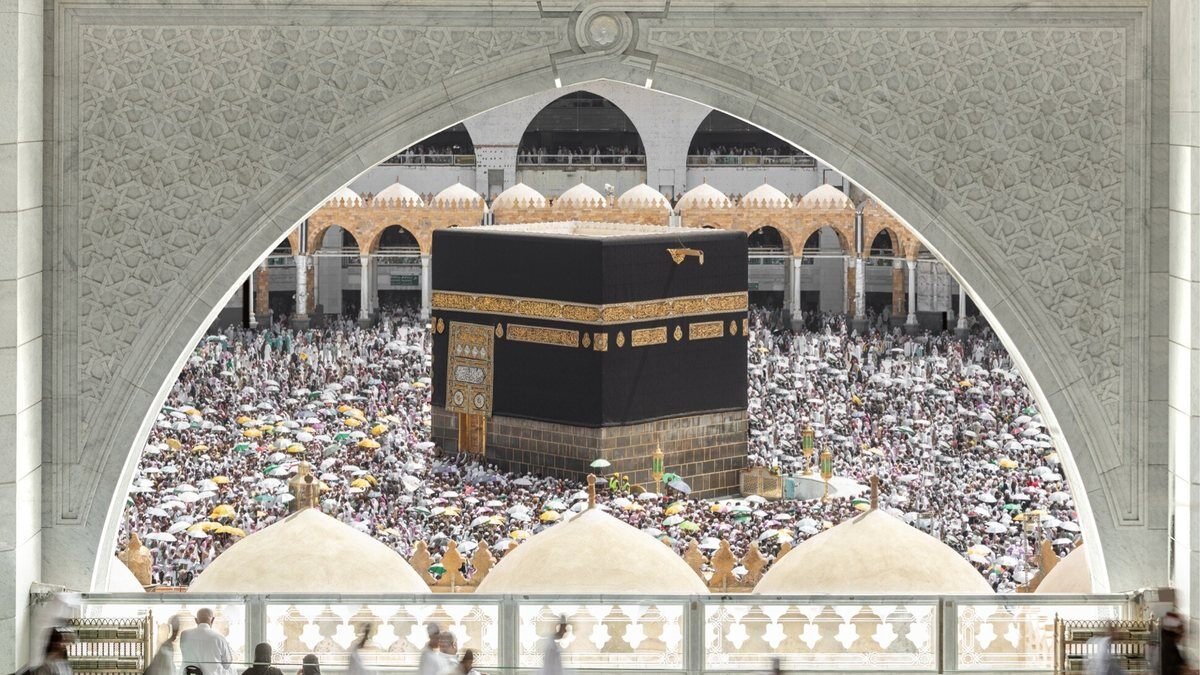
Tawaf is seven circuits around the Kaaba, counter-clockwise, starting and ending in line with the Black Stone. The mistakes that can affect its validity are few, and the rest are matters of manners and Sunnah.
Mistakes that can affect validity
- Walking through Hijr Ismail. The low curved wall on the north side encloses an area that is part of the Kaaba (Sahih al-Bukhari 1584). A circuit that cuts through it does not go around the whole Kaaba, and scholars say it does not count.
- Losing count. If you are unsure, build on the number you are sure of.
- Tawaf without wudu. Most scholars hold that tawaf is invalid without wudu; in the Hanafi school it is still required and missing it carries a penalty. If your wudu breaks, renew it and ask how to continue.
Mistakes of manners and Sunnah
- Pushing to kiss the Black Stone. Kissing it is Sunnah, not a condition. When he could not reach it, the Prophet ﷺ pointed toward it and said the takbir (Sahih al-Bukhari 1613). Harming people to reach it defeats the purpose.
- Walking against the flow or stopping in the middle of the mataf to take photos or make long dua. Step to the edge instead.
- Raml and idtiba at the wrong time. The brisk walk (raml) is for men in the first three circuits of the tawaf of Umrah, and the uncovered right shoulder (idtiba) is for that tawaf only (Sahih al-Bukhari 1604). Men often keep the shoulder uncovered afterwards, including in prayer. Cover it once the tawaf ends.
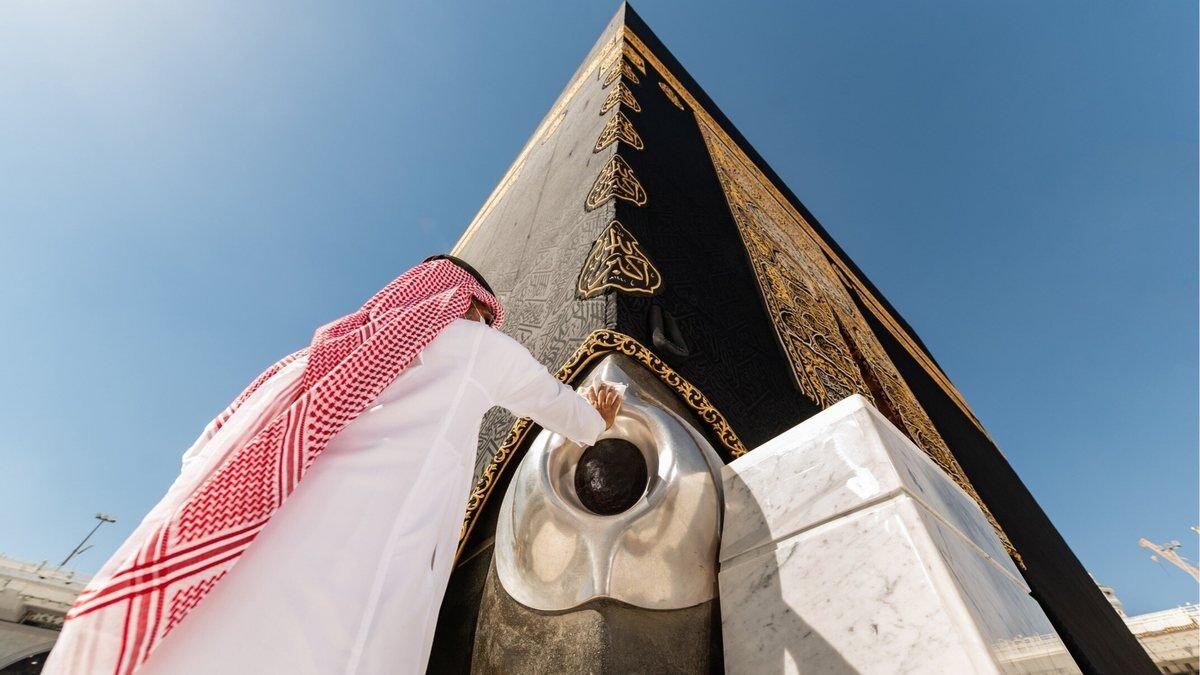
- Touching or kissing other parts of the Kaaba and the Maqam. The Prophet ﷺ touched only the Black Stone and the Yemeni corner (Sahih al-Bukhari 1609), and the Ministry of Hajj and Umrah asks pilgrims not to wipe the Maqam Ibrahim.
Sa’i Mistakes
Sa’i is seven laps between the hills of Safa and Marwah, starting at Safa. Safa to Marwah is one lap and Marwah back to Safa is the second, so the seventh lap ends at Marwah (Qur’an 2:158; Sahih Muslim 1218).
- Counting a round trip as one lap and walking fourteen.
- Starting at Marwah. The Prophet ﷺ began at Safa.
- Women jogging between the green lights. The jog is for men.
- Stopping sa’i because wudu broke. Wudu is recommended for sa’i but is not required by the four schools, so you can continue.
Cutting the Hair the Wrong Way
Umrah ends when men shave or trim their hair and women trim theirs. For men, both options are valid: the Qur’an mentions heads “shaved” and hair “shortened” (Qur’an 48:27), and the Prophet ﷺ prayed three times for those who shaved and then for those who trimmed (Sahih al-Bukhari 1727). Shaving is better, but it is not required.
- Men snipping a few hairs from one side. The schools differ on the minimum, from three hairs to the whole head. Shaving or trimming the whole head satisfies every school.
- Men shaving part of the head and leaving the rest. Shave all of it or trim all of it.
- Women cutting one lock. Ministry of Hajj and Umrah guidance is to trim about 1 to 2 cm, a fingertip’s length, from the ends of all the hair.
- Leaving ihram without cutting at all because there was no barber nearby. Barber centres operate near the Haram, and a woman can trim her hair in her hotel room with a companion.
- Leaving hair on the mosque floor. Cutting hair inside the mosque, including at Marwah, leaves a mess for others. Use a barber or your room.
Conduct in the Haram
Many of the mistakes that bother other pilgrims most are about conduct, not rites. Saudi guidance for the Two Holy Mosques is direct about them:
- Reserving a place with a bag or prayer mat and leaving it.
- Sitting or praying in walkways and doorways, which blocks the flow of people.
- Photography during worship. The Ministry’s guide says photography “may distract you from worship, infringe upon the privacy of others, and disturb visitors.” Take your pictures quickly, away from people praying.
- Letting children run in the open courtyards, where crowds and carts move fast.
- Speaking loudly or pushing in tawaf and sa’i. Patience with pilgrims from very different backgrounds is part of the worship.
Travel Mistakes That Wear You Down
These do not affect the validity of Umrah, but they are what first-time pilgrims most often say they wish they had known.
- Stay with your group and follow your group leader’s timings. Agree a meeting point outside the Haram before every prayer.
- Respect the heat. The Saudi Ministry of Health advises drinking enough fluids and avoiding direct sun during the rites. An umbrella and the cooler hours help.
- Bring enough of your own medicines for the whole trip, plus a few days’ spare.
- Keep your passport and valuables secure, and carry a copy of your passport and hotel card.
- Plan for older and disabled travellers. They should travel with a companion, and the group leader should know their needs before departure. Wheelchairs and carts are available at the Haram.
- Expect some delay and some change. Flights run late and a hotel room may not match the photo. Patience, and a group leader who deals with the hotel for you, solves most of it.
- Don’t turn Umrah into sightseeing. Ziyarat in Makkah and Madinah are worthwhile, but the purpose of the trip is worship. Leave room for it.
Already Made a Mistake? What to Do
Don’t panic, and don’t guess. Most mistakes have a known remedy in Islamic law, and some schools excuse certain slips made through genuine forgetfulness or ignorance. Tell your imam what happened, as soon as you can, and follow the answer of the school you follow.
| Question | Where the schools differ | A choice that satisfies all |
|---|---|---|
| Wudu for tawaf | A condition for most schools; required but not a condition in the Hanafi school | Keep wudu for the whole tawaf |
| Wudu for sa’i | Not required by any of the four schools | Recommended, not required |
| Men’s haircut | From three hairs (Shafi’i) or a quarter of the head (Hanafi) to the whole head (Maliki, Hanbali) | Shave or trim the whole head |
| Women’s trim | From part of the hair to all of it | About 1–2 cm from the ends of all the hair |
| Passing the miqat without ihram | Whether going back removes the penalty | Go back to a miqat, then ask your imam |
A specific note for women: a woman who is menstruating can do everything except tawaf (Sahih al-Bukhari 305), so she waits in ihram until she is clean and then performs tawaf and sa’i. If her flight home comes before that, scholars differ on what she should do. Ask a scholar before the trip if this is a possibility, not after.
For the full sequence of the rites, see our guide to what Umrah is and how it is performed and your first Umrah, day by day.
Perform your Umrah with an imam beside you
Hisar Tour groups travel with an experienced imam who teaches the rites before departure and answers your questions on the spot. See our upcoming departures and hotels.
See Umrah Packages
WhatsApp +1 201-201-8992
A UAMA community organization
Frequently Asked Questions
What is the most common mistake in Umrah?
For travellers from North America, the most consequential one is passing the miqat on the plane without ihram and waiting until Jeddah. During the rites, the most common are walking through Hijr Ismail in tawaf, counting sa’i laps wrongly and cutting only a few hairs at the end.
Does my Umrah count if I made a mistake?
In most cases, yes. Many mistakes are corrected by repeating a circuit or a step, and some require a sacrifice or charity. A few, such as leaving out tawaf, mean the Umrah is not complete until the missing rite is done. Ask your imam as soon as possible.
Do men have to shave their heads after Umrah?
No. Shaving is better, but trimming the hair of the whole head is also valid. Both are mentioned in the Qur’an (48:27).
Can I do Umrah without a Nusuk permit?
No. Saudi Arabia requires an Umrah permit booked in the Nusuk app before you go to Masjid al-Haram to perform Umrah. If you travel with a group, confirm who is booking it for you.
Is there a special dua for each round of tawaf?
No specific dua for each circuit is reported from the Prophet ﷺ. You can make any dua, in any language, and recite Qur’an or dhikr.
Religious references are to the Qur’an and the major hadith collections; where the schools of Islamic law differ, the main positions are summarized and your own scholar is the reference for personal rulings. Administrative and health rules are as published by the Saudi Ministry of Hajj and Umrah, Ministry of Health and SFDA, checked in September 2026. Last reviewed: September 2026.
Sources: Ministry of Hajj and Umrah — Umrah and Visit Guide · Saudi MOH — Umrah health requirements · SFDA — controlled medicines · Sahih al-Bukhari 1524, 1584, 1604, 1609, 1613, 1727, 1838, 305 · Sahih Muslim 1218 · Qur’an 2:158, 2:196, 48:27