
Saudi Arabia no longer requires a woman to travel with a mahram to perform Umrah. What still needs planning is where you pray, when women can enter the Rawdah, and what happens if your period starts mid-trip.
This guide separates three things that get mixed together in most answers: the Saudi administrative rule, the religious question your scholar answers, and the practical arrangements a group has to get right for women travelling without a husband, father or brother.
Prayer areas · gate numbers
Rawdah · women’s hours
Most pages written for women performing Umrah stop at a dress code and a reminder to be patient in crowds. The questions we actually get asked are narrower and harder: can I go with my sister instead of my husband, where am I allowed to pray when the Mataf is full, why does the Rawdah booking screen show no slots at the hour I am free, and what do I do if my period arrives the night before the group enters Ihram. Those are the questions this guide answers. If you are also choosing dates and a hotel, our Umrah departures page shows which programmes start in Madinah and which in Makkah, which changes several of the answers below.
Do You Need a Mahram?
As a matter of Saudi entry and booking rules, no. The Ministry of Hajj and Umrah’s own FAQ states that “a Mahram is not mandatory for all Hajj packages” and that “women can register under a women-only group.” The policy was announced in 2022, when the Minister of Hajj and Umrah, Dr. Tawfiq Al-Rabiah, said a mahram is “no longer required to accompany a woman pilgrim, who wishes to travel to Saudi Arabia to perform Hajj or Umrah from any part of the world.” Nothing in the visa or Nusuk permit process asks for a male relative’s name.
The religious question is separate, and the Saudi rule does not settle it. The discussion turns on a hadith in which the Prophet ﷺ said, “A woman should not travel except with a Dhu-Mahram” — and in the same narration, when a man said he was enlisting in an army while his wife wanted to perform Hajj, the Prophet told him, “Go along with her” (Sahih al-Bukhari 1862). Scholars have long differed over how that applies to a woman travelling in a safe, organised group on a modern journey, and the four schools do not give one answer. That is a question for a scholar who knows your situation, not for a travel company and not for a government circular.
What a Woman Wears in Ihram
There is no special Ihram garment for women. A woman enters Ihram in ordinary modest clothing of any colour — white is a custom, not a requirement — and the intention and Talbiyah do the rest. What does change is that a woman in Ihram does not cover her face with niqab or wear gloves. The Prophet ﷺ said that “the Muhrima (a woman in the state of Ihram) should not cover her face, or wear gloves” (Sahih al-Bukhari 1838).
Two practical notes follow from that. First, if you normally wear niqab, decide before the flight how you will handle the hours in Ihram and ask your imam about the views on shielding the face from strangers without a fitted covering. Second, because the clothes you enter Ihram in are the clothes you will be in for many hours, pick something you can pray, walk and sit on a coach floor in. Fitted abayas with long trailing hems get stepped on in the Mataf. Our Ihram guide for men and women covers the prohibitions in full, and the packing list from the USA has the clothing quantities that actually work for a nine or ten-night programme.
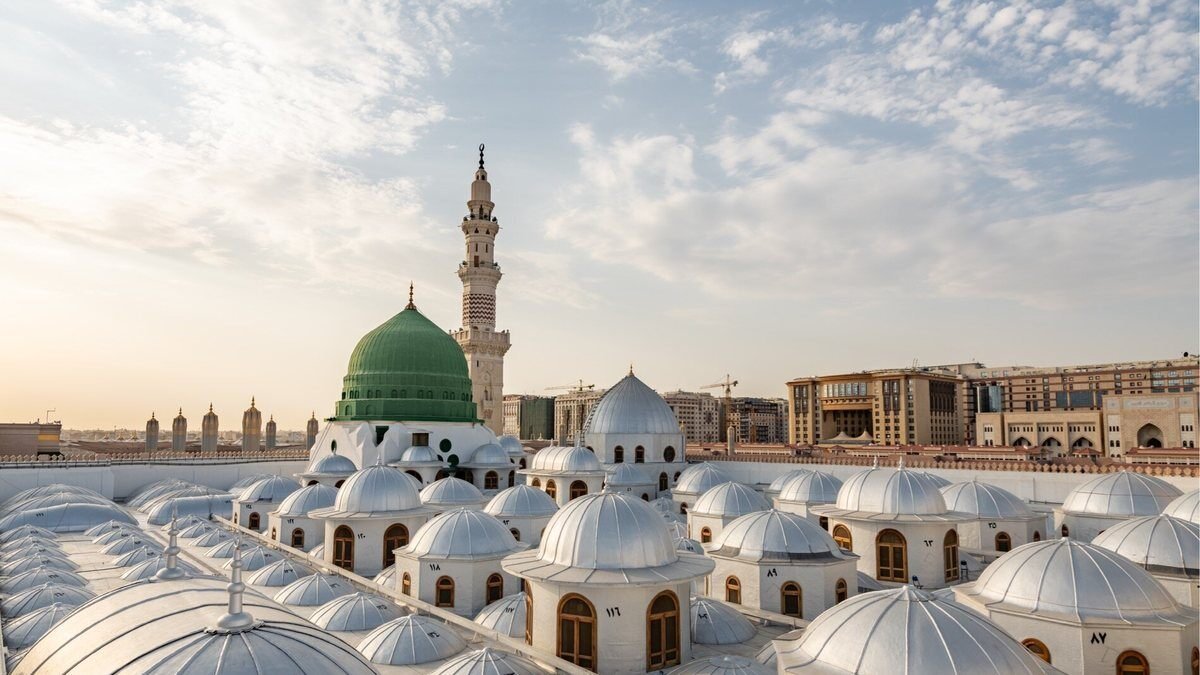
Where Women Pray in the Haram
Women pray in designated areas rather than anywhere in the mosque, and knowing the gate numbers is worth more than knowing the floor plan. The General Presidency for the Affairs of the Two Holy Mosques has published the women’s prayer areas set aside for elderly visitors and visitors with disabilities at the Grand Mosque: the ground floor at Gate 88, the first floor at Gate 65 Shabika, Chapel 15 overlooking the Mataf courtyard, and the southern courtyard prayer area near the Ajyad Bridge. All of them are stocked with copies of the Qur’an and Zamzam water.
Those four are the ones to memorise even if nobody in your group uses a wheelchair, because they are the calmest women’s spaces in the building and they are where a group can reliably reunite. The Presidency also staffs women’s areas with a female team that “provides guidance, counselling, and religious advice to visitors,” and equips the elderly women’s areas with large-print Qur’ans, Qur’an holders that mount on a wheelchair, and reading pens. Friday sermons are interpreted in sign language through the Manarat Al-Haramain platform.
Tawaf and Sa’i in a Crowd
The ground floor of the Mataf is the shortest route around the Kaaba and, for exactly that reason, the most crowded. In March 2026 the Ministry of Hajj and Umrah confirmed that “the ground floor of the Mataf has been designated exclusively for Umrah performers,” with Tawaf also available on the upper floors according to capacity and operational arrangements. The Grand Mosque now runs Tawaf across a ground floor, a first floor, two mezzanines and a rooftop, with a stated capacity of up to 107,000 circumambulators per hour.
For a woman walking with family, the trade is straightforward and worth making consciously: the ground floor is short and physical, the upper levels are long and calm. A circuit on the roof is several times the distance of a circuit at ground level, so seven circuits up there is a genuine walk — but it is a walk you control, without being carried along by a moving crowd. If you are performing Umrah with elderly parents or small children, that difference usually decides the level for you before anything else does.
Two of the Sunnah practices in Tawaf are men’s practices and not women’s: uncovering the right shoulder and hastening between the green markers. If you are unsure which parts of the ritual apply to you, go through it with your imam before you fly rather than at the Mataf; our list of common Umrah mistakes collects the ones that are hardest to undo.
The Rawdah: Women’s Hours
Women and men enter the Rawdah at different times of day, which is the single most common reason a Rawdah plan falls apart. A permit is booked through the Nusuk app and, on the scheduled route, is “valid once every 365 days.” These were the times announced by the General Authority for the Care of the Affairs of the Two Holy Mosques on 24 May 2026 for the Hajj season:
| Who | Ordinary days | Fridays |
|---|---|---|
| Women | After Fajr until 11:00 am; after Isha until 2:00 am | After Fajr until 9:00 am; after Isha until 2:00 am |
| Men | 2:00 am until Fajr; 11:20 am until Isha | 2:00 am until Fajr; 9:00 am until Isha |
On a phone, swipe the table sideways to see every column.
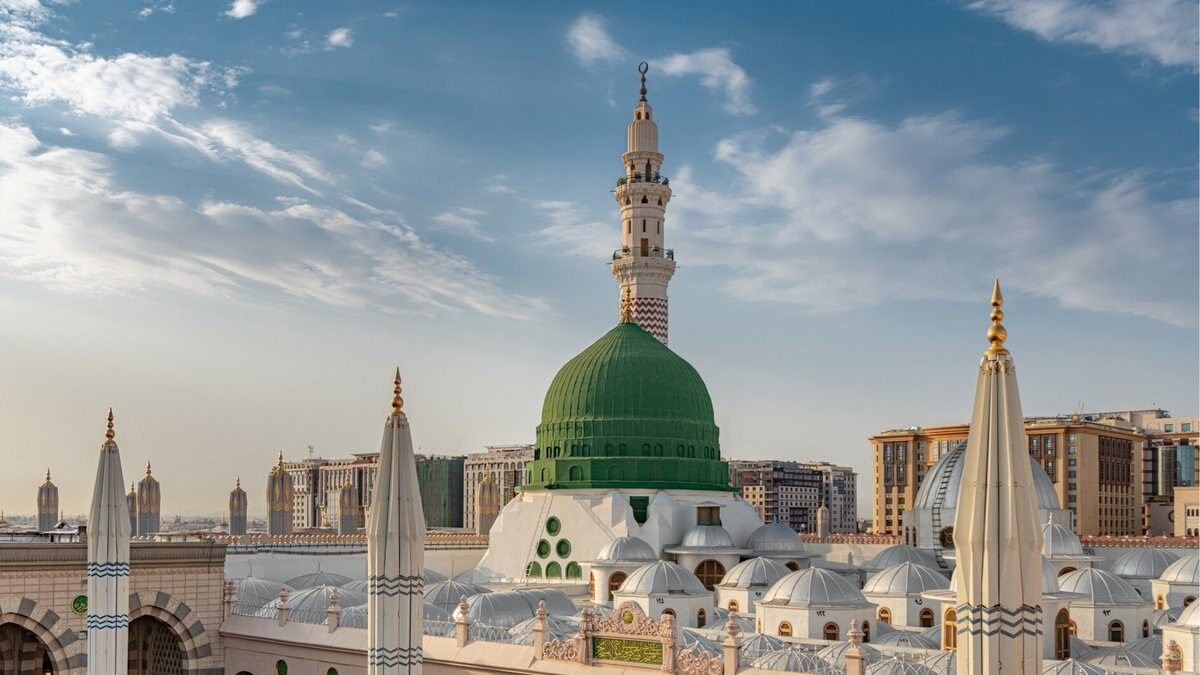
Read the women’s row against your itinerary before you book anything. Both women’s windows sit at the edges of the day: early morning, or the middle of the night. A programme that leaves Madinah for Makkah on a mid-morning coach, or that gives you two nights in Madinah with a late arrival, can leave a woman holding a valid permit she has no realistic hour to use. The earlier announcement from December 2025 adds the detail that matters on the ground: entry “is strictly managed through the southern courtyards in front of Makkah Gate 37.” Times are re-announced for Ramadan and for the Hajj season, so check the app for the dates you are travelling. The full booking process, including the two routes that do not use the 365-day permit at all, is in our step-by-step Rawdah booking guide.
If Your Period Starts
You can still perform almost the whole journey. The one act you wait for is Tawaf. When Aisha reached Makkah menstruating, she reported that the Prophet ﷺ told her, “Perform all the ceremonies of Hajj like the other pilgrims, but do not perform Tawaf of the Ka’ba till you get clean” (Sahih al-Bukhari 1650). Praying in the mosque, reciting, making dua, visiting Madinah and the ziyarah sites all continue as normal for the rest of the group’s programme; entering Ihram itself is not prevented by menstruation.
The timing changes what your options are, so it is worth knowing both cases before you leave home:
- It starts before you enter Ihram. You have room to move. Depending on your itinerary you may be able to put off entering Ihram, or start in Madinah and perform Umrah later in the trip. This is one of the practical arguments for a Madinah-first programme, which most of our departures are.
- It starts after you enter Ihram, before Tawaf. You remain in Ihram and its restrictions until you can perform Tawaf and Sa’i. That can mean several days in Ihram, which is uncomfortable but not invalid.
- It starts after Tawaf and Sa’i. Your Umrah is complete once you cut your hair. Nothing is affected.
Two honest cautions. First, some women ask about medication to delay a period around the trip. That is a medical decision with real side effects and it belongs with your own doctor well in advance, not with a group leader in Madinah. Second, if you are travelling on a short programme with a fixed return flight, ask your operator before you pay what actually happens if a woman in the group cannot perform Tawaf before the coach leaves Makkah — whether there is a later group, a paid extension, or simply nothing. A company that has a clear answer has met the situation before.
Ten Questions to Ask Before You Book
These are the questions that separate a group that has thought about women travelling without a male relative from one that has not. Ask them of any operator, including us.
- Who will I actually share a room with? If you book a quad as two sisters, who fills the other two beds, and are they women you will be told about before you fly?
- Is there a woman on the group staff? Not a phone number at head office — a woman travelling with the group.
- Which number do I use at 2:00 am in Madinah, and who answers it?
- How far is the hotel on foot, and by which route? Advertised distances are measured to the nearest boundary, not to the door you will use. Our Makkah hotel walking-distance guide explains the gap.
- What are the Madinah arrival and departure times? Then check them against the women’s Rawdah windows above.
- Does the group move at night, and is anyone accompanying women who want to pray in the quiet hours?
- Who books the Rawdah permits — me, or the operator — and by when?
- What is the plan if I cannot perform Tawaf on the scheduled day?
- Is there an imam travelling with the group, and are there sessions before departure where I can ask questions at home?
- What is in writing? Room type, hotel names, meals and every fee should be written down before you pay anything. Our guide to refund and cancellation terms covers what to read in the contract.
Plan your Umrah with a group that answers these questions in advance
See our upcoming departures, which nights are in Madinah, and how rooms are arranged — then ask us the ten questions above.
See Umrah Packages
WhatsApp +1 201-201-8992
Hisar Tour · A UAMA community organization · hisartour@uama.us
Common Questions
Can I perform Umrah with my sister and no male relative?
Saudi rules allow it: the Ministry of Hajj and Umrah states a mahram is not mandatory and that women can register in a women-only group. Whether it is permissible for you religiously is a separate question the schools answer differently, so ask your own scholar.
Do women wear white for Umrah?
No. There is no special Ihram garment for women. Ordinary modest clothing in any colour is fine. What changes in Ihram is that niqab and gloves are not worn.
When can women enter the Rawdah?
On the schedule announced in May 2026, after Fajr until 11:00 am and again from after Isha until 2:00 am, with the morning window ending at 9:00 am on Fridays. Times are re-announced for Ramadan and Hajj, so check the Nusuk app for your dates.
How often can I get a Rawdah permit?
The scheduled permit is valid once every 365 days per person. Two other routes exist — instant booking when you are near the mosque and within capacity, and a waitlist — and those are not limited the same way.
What if my period starts during the trip?
You continue everything except Tawaf, on the guidance the Prophet ﷺ gave Aisha (Sahih al-Bukhari 1650). If it starts after you have entered Ihram but before Tawaf, you stay in Ihram until you can perform it.
This guide gives general information with its sources. It is not a personal religious ruling; ask a qualified scholar about your own situation. Saudi permit rules and Rawdah times change by season and are re-announced — check the Nusuk app for your travel dates. Last reviewed: September 2026.
Sources: Ministry of Hajj and Umrah, FAQ · Saudi Gazette, Hajj minister on the mahram requirement · SPA, Rawdah visit times announced for the Hajj season · SPA, Rawdah visiting hours and Nusuk permits · SPA, Grand Mosque services for elderly and disabled Umrah performers · SPA, Grand Mosque services for women · SPA, Ministry Tawaf guidelines · SPA, Mataf capacity · Bukhari 1862 · Bukhari 1838 · Bukhari 1650