
Most Umrah mistakes happen at four points: crossing the Miqat without Ihram, small errors in Tawaf, cutting too little hair at the end, and missing Saudi permit rules that have nothing to do with the rituals.
Almost all of them are easy to avoid once you know them. This guide lists the common ones in the order you will meet them, separates what scholars say from what Saudi rules say, and notes where the four schools of fiqh differ.
Saudi rules · Nusuk & mosque
Practical · heat, crowds, groups
Three kinds of mistake get mixed together in most lists. Religious mistakes affect the validity or completeness of your Umrah, and scholars sometimes differ on them. Administrative mistakes break a Saudi rule, such as the permit system; they can stop you at a gate but are not religious rulings. Practical mistakes cost you energy, time or your group. This guide labels each one, because the fix is different.
Before You Fly
1. Not planning where you enter Ihram (religious)
If you fly from the US or Canada to Jeddah for Umrah, you must be in Ihram before the plane crosses the Miqat. The Ministry of Hajj and Umrah states that Jeddah airport “is neither a Miqat nor a place for entering Ihram.” Changing into Ihram after landing in Jeddah is a serious and avoidable mistake, because the Miqat is crossed in the air, not on the ground.
What if it happens? According to the majority of scholars, a person who passes the Miqat intending Umrah without Ihram should go back to the Miqat. If they do not, a sacrifice (dam) is due in Makkah. If they return to the Miqat before entering Ihram, nothing is due. The Maliki and Hanbali schools hold that the sacrifice is still due if Ihram was already entered after the Miqat, even if the person then goes back. The Miqat points themselves are set in the hadith (Sahih al-Bukhari 1524 and 1526). Our guide to the Miqat for flights from the USA shows when to change on board.
2. Assuming a visa is enough (administrative)
Every Umrah needs a permit through the Nusuk app, whatever visa you hold. The Saudi Press Agency confirmed that Umrah permits for the 1448 season are issued through Nusuk from June 1, 2026. Install the app before you fly and make sure your permit shows the correct date. If you plan to visit the Rawdah in Madinah, book that separately in Nusuk: a Rawdah permit is generally issued once every 365 days.
In Ihram
3. Uncovering the right shoulder the whole time (religious)
Men uncover the right shoulder (idtiba’) only during the Tawaf of Umrah. It is not for the whole period of Ihram, not for Sa’i, and not before Tawaf starts. The practice comes from the Companions’ Umrah from al-Ji’ranah (Sunan Abi Dawud 1884). Cover the shoulder again when you finish Tawaf.
4. Women covering the face and hands with niqab and gloves (religious)
A woman in Ihram does not wear niqab or gloves. The Prophet ﷺ said the woman in Ihram “should not cover her face, or wear gloves” (Sahih al-Bukhari 1838). Her normal modest clothing is fine. The detailed list of what Ihram forbids for men and women is in our Ihram guide.
5. Believing things that are not rules (religious)
Scholars list several beliefs that add difficulty without any basis: that you may never change or wash your Ihram garments, that shoes are required, that you must pray two rak’ahs to enter Ihram, or that the intention for Tawaf has to be spoken aloud.
During Tawaf
6. Walking through Hijr Isma’il (religious)
The low semicircular wall beside the Kaaba encloses Hijr Isma’il, and the Prophet ﷺ confirmed to Aisha that it is part of the House (Sahih al-Bukhari 1584). If you walk through it, you have gone around only part of the Kaaba and that circuit does not count. Stay outside the wall.
7. Jogging all seven circuits (religious)
Raml, walking briskly with short steps, is for men in the first three circuits only. The Prophet ﷺ “did Ramal in (first) three rounds… and walked in the remaining four” (Sahih al-Bukhari 1604). Women do not do raml. In a crowd, if raml would push others, walk normally.
8. Reading a different dua for every circuit (religious)
There is no authentic dua set for each circuit. The small booklets that assign one to each round are a later practice, and scholars have warned against treating them as Sunnah. The one set supplication is between the Yemeni Corner and the Black Stone: “Rabbana atina fid-dunya hasanah, wa fil-akhirati hasanah, wa qina ‘adhaban-nar” (Sunan Abi Dawud 1892). The rest of the time, make dua in your own words and your own language.
9. Pushing to reach the Black Stone (religious and practical)
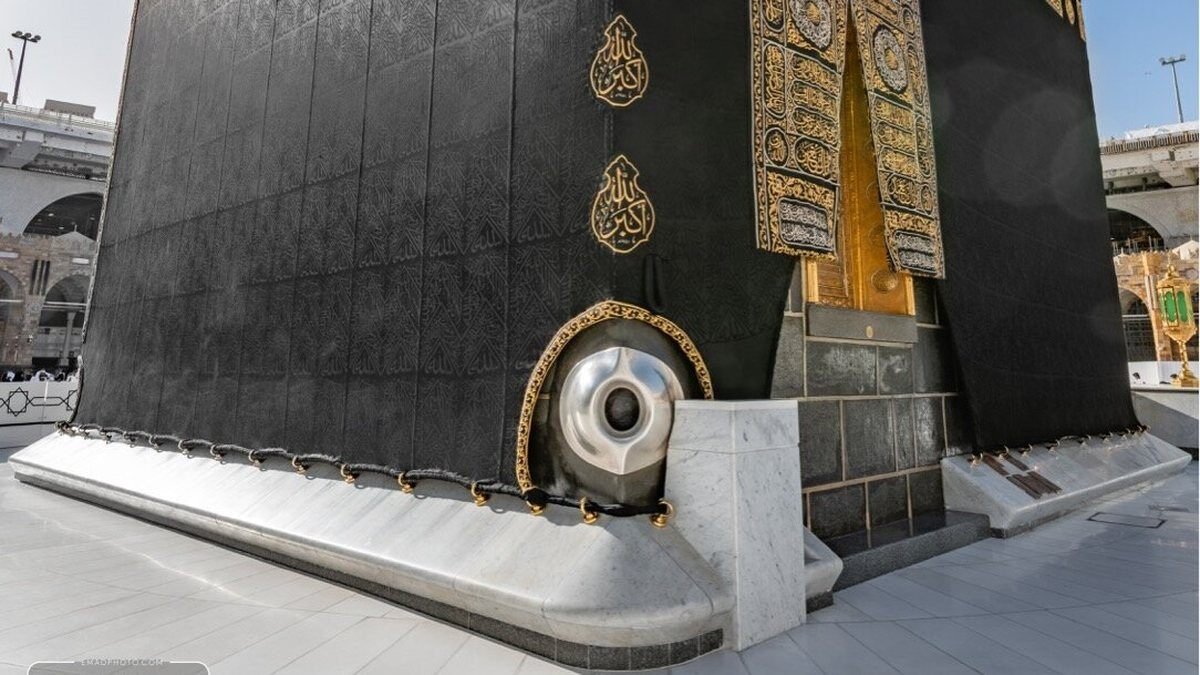
Kissing the Black Stone is Sunnah; harming people to reach it is not. The Prophet ﷺ told ‘Umar not to crowd others at the Black Stone “lest you harm the weak” (Musnad Ahmad 190). If you cannot reach it, point toward it and say “Allahu Akbar” (Sahih al-Bukhari 1613). Scholars also note that raising both hands as in the opening of prayer is not part of it, and that the stone itself neither helps nor harms, as ‘Umar said (Sahih al-Bukhari 1597).
10. Forcing a place right behind Maqam Ibrahim (religious and practical)
The two rak’ahs after Tawaf are prayed behind Maqam Ibrahim when possible (Qur’an 2:125). When it is crowded, scholars say they can be prayed anywhere in the mosque. Stopping in the flow of Tawaf to pray blocks everyone behind you.
During Sa’i
11. Starting at Marwah or miscounting the laps (religious)
Sa’i starts at Safa and ends at Marwah. The Prophet ﷺ recited the verse on Safa and Marwah (Qur’an 2:158) and said, “I begin with what Allah (has commanded me) to begin” (Sahih Muslim 1218). Safa to Marwah is one lap and Marwah back to Safa is the second, so the seventh lap ends at Marwah. If you finish at Safa, you have done eight.
12. Running the whole way (religious)
Men jog only between the two green lights. The rest of the distance is walked. Women walk the whole way. Scholars also list raising the hands toward the Kaaba on Safa and Marwah as if starting a prayer as a mistake; the Sunnah is to face the Kaaba and make dua.
The Haircut: Where the Schools Differ
Umrah ends with shaving or cutting the hair. The Prophet ﷺ prayed for those who shave three times before including those who shorten (Sahih al-Bukhari 1727), so shaving is better for men. The common mistake is cutting a few strands and assuming that is enough. How much is required depends on your school:
| School | Men: minimum to leave Ihram by cutting |
|---|---|
| Hanafi | At least a quarter of the head |
| Maliki | From the whole head; part of the head is not enough |
| Shafi’i | At least three hairs |
| Hanbali | From the whole head; part of the head is not enough |
On a phone, swipe the table sideways to see every column.
Women never shave; “only clipping” is prescribed for them (Sunan Abi Dawud 1985). The usual guidance is to cut about a fingertip’s length, roughly two centimeters, and the schools differ on how much of the hair it must be taken from. A practical point for men who plan to shave: use a licensed barber with a new blade, not a stranger with a shared razor. If you are unsure which view to follow, ask your imam before the day, not at Marwah.
In the Two Holy Mosques
13. Filming instead of worshipping (etiquette)
There is no official ban on photography in the Two Holy Mosques; viral claims of one have been denied. What the Ministry of Hajj and Umrah does ask is simple: do not be distracted from worship, do not film others without permission, and do not stop to take a picture where you cause congestion. The General Authority has asked pilgrims to make dua quietly during Tawaf rather than raising their voices.
14. Bringing big bags or sleeping in the walkways (administrative)
The Grand Mosque does not allow large bags, luggage or strollers, and food is limited to coffee, dates and water. Ministry guidance asks worshippers not to lie down or sleep in corridors, emergency routes or wheelchair paths. If you come straight from the airport with luggage, use the free luggage storage near the mosque; you need your Nusuk permit to use it.
15. Performing extra Umrahs back to back (religious and practical)
Scholars differ on repeating Umrah within one trip, and in Ramadan Nusuk has not issued a second Umrah permit in recent years. Even outside Ramadan, a second Umrah the day after the first can leave you exhausted for the rest of the trip. Extra Tawaf is always available and asks less of your body.
Practical Mistakes That Wear You Down
- Doing everything on day one. Arriving after a 12-hour flight and going straight from Umrah to every prayer leaves you drained for the rest of the trip. Rest after your Umrah.
- Ignoring the heat. The Saudi Ministry of Health advises umbrellas, enough water and avoiding long walks in direct sun, and warns about dizziness, fatigue and heavy sweating. Makkah can be very hot even outside summer.
- No meeting point. Choose a numbered gate before you separate. If a family member is lost, the Guest Care centers inside both Holy Mosques help lost women and children around the clock, and children’s ID wristbands are available at the entrances.
- Letting the trip become sightseeing. Shopping, photos and ziyarah all have a place, but they are not the purpose. Plan them around the prayers, not the other way round.
- Expecting nothing to go wrong. Flights are delayed and rooms are sometimes not ready on arrival. Carry water, a snack and your medicines in your hand luggage, and give your group leader time to fix problems.
- Losing your shoes. Carry them in a small bag, or note the rack number and the gate you entered by.
- Forgetting medicines. Keep prescriptions in their original packaging in your carry-on. Our Umrah health guide covers the rules.
- Not planning for elderly relatives. Wheelchairs and help pushing them are easier to arrange before you arrive than on the day. Choose a hotel within a short walk of the Haram; our guide to what walking distance really means in Makkah gives honest minutes.
A note on women and menstruation
A woman whose period starts can do every part of Umrah except Tawaf, and waits until she is pure before performing it (Sahih al-Bukhari 305). A common mistake is to assume the Umrah is lost. It is not; it is delayed. Plan a few spare days if you can, and speak to your group leader privately so the schedule can adjust.
Perform your Umrah with someone who explains each step
See our upcoming Umrah departures with an imam, seminars before you fly and a group that stays together.
See Umrah Packages
WhatsApp +1 201-201-8992
Hisar Tour · A UAMA community organization · hisartour@uama.us
Common Questions
What happens if I cross the Miqat without Ihram?
Most scholars say you should return to the Miqat and enter Ihram there. If you do not, a sacrifice (dam) is due in Makkah. The schools differ on some details, so ask your imam.
Is there a special dua for each round of Tawaf?
No authentic dua is set for each circuit. The one set supplication is between the Yemeni Corner and the Black Stone. Otherwise, make dua in your own words.
How much hair should a woman cut after Umrah?
Most scholars say a fingertip’s length, about two centimeters. The schools differ on whether it must be from all the hair or part of it.
Can I take photos in the Haram?
There is no official ban, but the Ministry asks pilgrims not to be distracted from worship, not to film others without permission and not to cause congestion.
This guide gives general information with its sources. It is not a personal religious ruling; ask a qualified scholar about your own situation. Saudi rules described here can change each season. Last reviewed: September 2026.
Sources: Ministry of Hajj and Umrah, Miqats · Bukhari 1524 · Bukhari 1526 · Abu Dawud 1884 · Bukhari 1838 · Bukhari 1584 · Bukhari 1604 · Abu Dawud 1892 · Musnad Ahmad 190 · Bukhari 1613 · Bukhari 1597 · Qur’an 2:125 · Qur’an 2:158 · Muslim 1218 · Bukhari 1727 · Abu Dawud 1985 · Bukhari 305 · SPA, 1448 Umrah season · SPA, Rawdah permit · Saudi Gazette, Tawaf etiquette · Saudi Gazette, Ministry guidance · SPA, luggage storage · SPA, Guest Care centers · SPA, MOH heat advice