
Prepare physically for Hajj by building walking volume over about 90 days, on consecutive days, in the footwear you will wear, after your physician has reviewed the plan.
Hajj is a long walking pilgrimage done in heat and crowds, several days in a row, with little sleep. You can’t rehearse Makkah’s May heat in a northern US winter, but you can arrive able to walk far, recover overnight and walk again. For Hajj 2027 the 90-day window is expected to start in early February, which means much of it falls in Ramadan. This plan is built around that.
The reader we have in mind sits at a desk in Chicago or Toronto, walks less than they would like, and has registered for Hajj 2027. Nothing below is extreme; the aim is to turn up in Makkah with legs, feet and stamina that aren’t being tested for the first time. If you’re still choosing a package, our Hajj 2027 preparation page collects our seminars and guides, and the walking you can manage is one of the inputs to how to choose your Nusuk Hajj package.
What Hajj Asks of Your Body
Hajj asks for repeated walking over several days, mostly in heat, with interrupted sleep and no real rest day between the main rites. The move to Mina, the day at Arafat, the night at Muzdalifah, the walks to the Jamarat, Tawaf and Sa’i all fall within a few days in Dhul Hijjah.
The Jamarat walks show the scale. Nusuk lists two camp areas in Mina: Majar Al-Kabsh, “300 to 700 meters” from the Jamarat Bridge, and Al-Muaisim, “approximately 4 km” away. Pilgrims walk from camp to the Jamarat on the 10th of Dhul Hijjah and again on the days after it. From the farther camp, that can be eight kilometers or more on foot in a day, before Tawaf, before walking to prayers, and repeated the next day. Nusuk’s FAQ puts it plainly: “It is important to ensure physical capability to avoid health issues during the journey.”
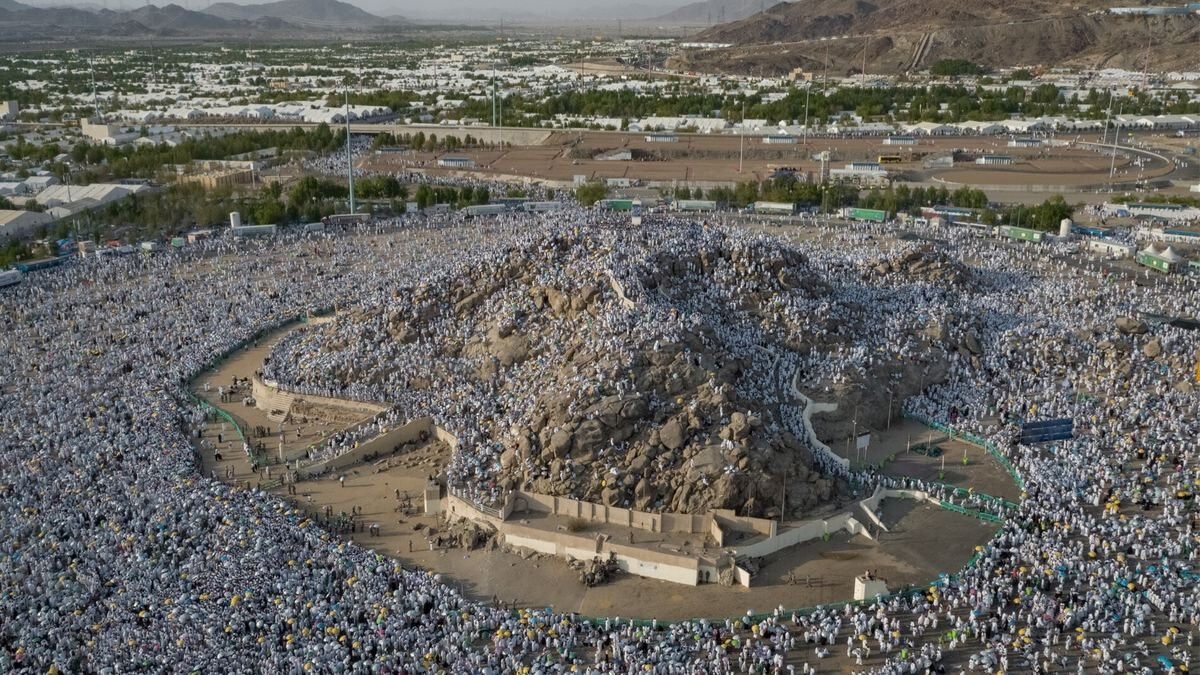
That gives the plan its goal, framed as general fitness rather than a medical target: by departure, be able to walk for two to three hours at an easy pace, on two or three days in a row, and feel ready to go again the next morning.
Before Day 1: The Physician Visit
Book the physician visit first, before you change how much you walk. Three things are worth taking to that appointment.
The Saudi capability list. The Saudi Ministry of Health’s requirements for the 1447 season ask countries to declare their pilgrims free of conditions that “typically impede pilgrims from carrying out the rituals”. The list includes kidney failure requiring dialysis, heart failure “with symptoms on minimal physical effort”, chronic lung disease needing oxygen, dementia, the last three months of pregnancy or high-risk pregnancy, and cancer treatment that severely suppresses the immune system. The same document includes a pilgrim health status certificate for a physician to sign. Whether that form is used for Nusuk pilgrims from the US in 1448 should be confirmed when the 1448 requirements are published.
Your medicines in heat. The same document says that medications “that can exacerbate dehydration (e.g. diuretics) or interfere with heat exchange may need adjustment by treating physicians.” Ask about yours specifically, and ask for a written summary of your conditions and medicines; the Ministry advises pilgrims with chronic conditions to carry documentation and enough medication in its original packaging.
Vaccines with a deadline. For 1447 the Ministry required a meningococcal ACYW vaccine for all Hajj pilgrims: a conjugate vaccine within the last 5 years or a polysaccharide vaccine within the last 3 years, in either case at least 10 days before arrival, with the vaccine type shown on the certificate. Seasonal influenza vaccination was advised. Put these in the first month of the plan rather than the last week. Our guide to Umrah health preparation covers the vaccine paperwork in more detail.
Why the 2027 Window Runs Through Ramadan
Hajj 2027 is expected in mid-May, with the Day of Arafah expected around 15 May 2027 on the Umm al-Qura calendar, subject to the moon sighting. If your group flies around 5 May, day 1 of a 90-day plan falls around 4 February. Ramadan 1448 is expected from about 8 February to 8 March 2027, with Eid around 9 March. So days 5 to roughly 33 of the plan are fasting days.
That isn’t a reason to skip the plan; it changes when you train. Walking after iftar, or a shorter walk before suhoor, keeps the habit going, and Taraweeh adds time on your feet. If you have diabetes or take medication, ask your physician how to combine fasting with exercise. Our Islamic holidays calendar has the expected dates.

The 90-Day Plan, Phase by Phase
The plan uses the US Physical Activity Guidelines as its floor. Those guidelines say adults need “at least 150 to 300 minutes of moderate-intensity aerobic activity, like brisk walking or fast dancing, each week”, plus “muscle-strengthening activity, like lifting weights or doing push-ups, at least 2 days each week.” Everything below is a way of reaching that, and then going a little beyond it, with walking.
Walk every day if you can, starting at whatever is comfortable today, even 20 minutes. Add a few minutes each week rather than a big jump. Two short strength sessions a week: sit-to-stand from a chair, step-ups on a stair, wall push-ups, calf raises. Once Ramadan starts, walk after iftar or before suhoor.
Ramadan is expected to end around day 33, and Eid is a good day to rest. After that, most days, 45 to 60 minutes at an easy pace you could talk through. Once a week, one longer walk that grows toward two hours. Start wearing the shoes or sandals you plan to take, and carry a small backpack with a water bottle on the long walk. Keep the strength sessions.
Twice in this phase, do long walks on two or three days in a row, the way the Hajj days run. Include stairs or a hill if you can. In the final week, ease off: shorter walks, plenty of sleep, nothing new. Arrive rested, not sore.
If you’re older, or have been inactive for a long time, stretch each phase and keep the goal smaller. The guidelines note that for older adults, physical activity also lowers the risk of falls, so the chair and step exercises above matter more, not less. Progress you can repeat matters more than any single long day.
Feet, Footwear and Sleep
Blisters end more training plans than tired legs. Whatever you will wear in ihram and around Mina, walk in it at home first, on long walks, so that new footwear isn’t being broken in on the Hajj days. Practise with the bag you will actually carry, packed with what you will actually carry.
Sleep is the part nobody trains. The Hajj days bring early starts, a night at Muzdalifah that most pilgrims spend outdoors, and shared tents in Mina. In the last weeks of the plan, protect your sleep at home and practise one or two early starts after a short night, so the first broken night of Hajj isn’t the first in years.
Heat: What the Health Authorities Advise
Training in a cold month can’t prepare you for May in Makkah, so the heat is managed on the ground, using official advice. Three sources say much the same thing.
- Saudi Ministry of Health (1447): “Pilgrims, especially older individuals, are advised to avoid direct sun exposure while performing rituals and to drink sufficient amount of fluids.”
- CDC, travel advice for Saudi Arabia: “Heat-related illness, such as heat stroke, can be deadly. Eat and drink regularly, wear loose and lightweight clothing, and limit physical activity during high temperatures.” It also advises salty snacks and water when you’re outside for many hours, and shade “during the hottest time of day (10 a.m.–4 p.m.)”.
- World Health Organization: “Heatstroke is a medical emergency with a high-case fatality rate.” Its public advice includes avoiding strenuous activity in the hottest hours and staying in shade.
In practice that means a few habits you can plan now: an umbrella for shade, drinking steadily rather than all at once, doing the walking you can choose in the cooler hours, and listening to your group leader on timing. Ask your physician to go through the warning signs of heat exhaustion and heatstroke with you, and make sure you know how to reach your group’s medical contact on the ground. If your physician has given you a fluid limit because of a heart or kidney condition, follow it rather than general advice.
If You Cannot Do the Walking
Some pilgrims won’t reach the walking goal, and that’s a planning question, not a failure. If walking is limited, it shapes the package: the Mina camp closer to the Jamarat, a non-shifting itinerary so there is one hotel, a Makkah hotel within walking distance of the Haram, and wheelchair arrangements for Tawaf and Sa’i agreed in writing in advance. Questions about delegating the stoning or other rites when a pilgrim is unable are questions of fiqh; ask a scholar or your group’s imam before you travel.
Our guide to Umrah with elderly parents covers wheelchairs, pacing and rest in more detail, and the same-week guide on how to save for Hajj runs on the same calendar for the money side.
Prepare for Hajj 2027 with the paperwork and the plan in order
Pre-register with us and tell us about any mobility needs in your group, so they are part of the package conversation from the start.
Hajj 2027 pre-registration WhatsApp +1 201-201-8992A UAMA community organization
How do I prepare physically for Hajj?
See your physician first, then build up walking over about 90 days: daily walks, a weekly long walk that grows toward two hours, two short strength sessions a week, and practice walking on consecutive days in the footwear you will take. Ease off in the last week.
How far do pilgrims walk during Hajj?
It depends on your camp and hotel. Nusuk lists one Mina camp area 300 to 700 meters from the Jamarat Bridge and another about 4 km away, and pilgrims walk to the Jamarat on several days. From the farther camp that can mean eight kilometers or more in a day, plus walking for Tawaf and prayers.
Can I train during Ramadan?
Many people move their walks to after iftar or before suhoor. If you have diabetes, take medication or have a heart condition, ask your physician how to combine fasting and exercise before you start.
Which vaccines do I need for Hajj?
For 1447 the Saudi Ministry of Health required a meningococcal ACYW vaccine for all pilgrims, at least 10 days before arrival (conjugate within 5 years, polysaccharide within 3). The 1448 requirements had not been published as of October 2026; check them when they are.
How do I avoid heat illness at Hajj?
Follow the official advice: avoid direct sun where you can, use shade and an umbrella, drink regularly, eat, wear light loose clothing and limit exertion in the hottest hours. Ask your physician about medicines that affect fluids or heat, and treat suspected heatstroke as an emergency.
This page is general information, not medical advice; consult your physician. Health requirements are from the Saudi Ministry of Health’s “Health Requirements and Recommendations for Travelers to Saudi Arabia for Hajj – 1447H (2026)”; the 1448 version had not been published when checked in October 2026. Camp distances were read on hajj.nusuk.sa on 10 October 2026 (1447 season). Hajj 2027 and Ramadan 1448 dates are expected dates on the Umm al-Qura calendar and depend on the moon sighting. Physical activity amounts are from the Physical Activity Guidelines for Americans (ODPHP). Last reviewed: October 2026.
Sources: Saudi Ministry of Health, Hajj health requirements 1447H (PDF) · CDC Travelers’ Health, Saudi Arabia · WHO, heat and health fact sheet · ODPHP, Physical Activity Guidelines for Americans · Nusuk Hajj, Packages & Categories · Nusuk Hajj, FAQ