

Children can perform Umrah at any age, and each child needs their own passport, visa and Nusuk permit. The two decisions that shape the whole trip are which level of the Mataf you do Tawaf on, and how much you plan to do in one day.
This is a practical guide rather than a list of encouragements: the paperwork per child, the services inside both mosques that most parents never hear about, what a realistic first day looks like, and the honest part about travelling with a toddler.
ID wristbands · three gates
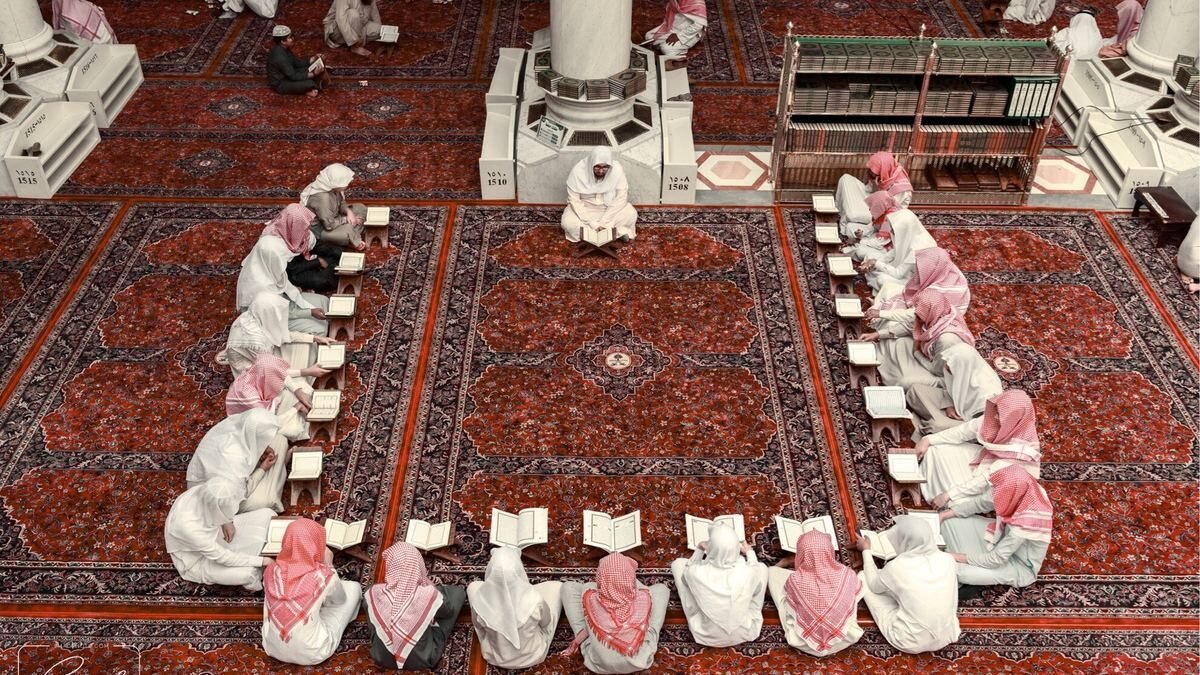
Madinah · children’s centre
Bringing children on Umrah is a long tradition, and Saudi authorities describe families who do it as wanting to “instill in them a love for obedience, good deeds, and getting closer to Allah Almighty from an early age.” None of that is in question. What parents actually write to us about is narrower: whether a four-year-old needs a permit, what happens if a child lets go of a hand in the Mataf, and whether a nine-night programme with a two-year-old is realistic. If you are still picking dates, school-break departures fill first — our Umrah departures page shows which ones run in the December and February breaks.
Passports, Visas and Permits for Children
Every child travelling needs their own passport and their own Saudi visa, however young. There is no arrangement where an infant travels on a parent’s document. Beyond that, Umrah itself is permitted by a permit issued through the Nusuk app, and the permit is issued per person: add each child as a companion in your Nusuk account and check that a permit has actually been issued in each name before you fly, rather than assuming the family is covered by yours.
One point of confusion worth clearing up. The Ministry of Hajj and Umrah’s FAQ gives a minimum age of “15 years for citizens and residents” — that rule is about registering for Hajj from inside Saudi Arabia, not about Umrah. It does not mean children cannot perform Umrah. For a US or Canadian family, the practical age limits are the ones you set yourself, based on heat, crowds and how far your child can walk.
Which Level to Perform Tawaf On
This one decision changes the day more than anything else. The Ministry of Hajj and Umrah confirmed in March 2026 that “the ground floor of the Mataf has been designated exclusively for Umrah performers,” with Tawaf also available on the upper floors according to capacity. The Grand Mosque runs Tawaf across a ground floor, a first floor, two mezzanines and a rooftop, with a stated capacity of up to 107,000 circumambulators per hour.
The trade for a family is simple and worth making deliberately:
| Level | What it is like with children | Best for |
|---|---|---|
| Ground floor | Shortest circuit, closest to the Kaaba, densest crowd. You will be carried along by the flow and cannot easily stop or turn back. | Older children who walk confidently, or a child carried by a strong adult |
| Upper levels and roof | Each circuit is several times longer, but the pace is yours. Room to stop, to carry a tired child, to keep a group together. | Under-sevens, strollers, and anyone with more than one child to watch |
On a phone, swipe the table sideways to see every column.
Parents who insist on the ground floor because it is “closer” often end up separated from half their family by circuit three. A roof Tawaf is a genuine walk — budget an hour and a half rather than forty minutes — but it is a walk you can manage. The same logic applies to Sa’i, where the upper level is usually calmer.
The ID Wristband Machines
This is the most useful thing in this guide and almost no one mentions it. The General Authority for the Care of the Affairs of the Two Holy Mosques has installed machines at the Grand Mosque that print identification wristbands for children. There are three, at the King Abdulaziz Gate, the King Fahd Gate, and the Ajyad Bridge. The wristbands “contain contact information, making it easier for the mosque staff to assist in swiftly reuniting the missing children with their guardians.”
Put one on every child under about ten on your first visit, and again if it comes off. If you cannot find a machine, write your own: a strip of paper in a pocket with a name and a Saudi mobile number that will actually be answered, plus your hotel name, does most of the same work. A phone number from home that is switched off to avoid roaming charges does not.
If a Child Gets Separated
It happens constantly, and there is a system. Two things to know before you need them.
First, the courtyards are patrolled by scouts whose specific job includes lost children — the Saudi Press Agency describes them caring for a separated child by offering “calm words and providing food and drink as needed” while “other scouts work to locate the child’s family through designated channels.” A child in a scout’s care is safe and is being actively reunited, not simply waiting.
Second, both mosques run Guest Care Centers: “two main guest care centers and 19 subsidiary centers across the two holy mosques,” operating 24 hours, whose services explicitly include “receiving and caring for lost children through organized procedures that ensure their safety and reassurance until they are reunited with their families.” The Authority publishes QR codes that locate the nearest centre. The same centres hold luggage, which is useful separately.
The Children’s Centre in Madinah
The Prophet’s Mosque runs a supervised children’s centre, and most visiting families have no idea it exists. It is “located on the northeastern side of the Prophet’s Mosque, between the exits of courtyards 339 and 340,” covers 268 square metres, and “hosts children daily from 5 am to 11 pm” under the supervision of specialised staff. Children are given meals in a dining area, and the centre runs educational and recreational programmes about Madinah’s landmarks and the Prophet’s ﷺ life. It is covered by surveillance and requires parental ID to collect a child. Between 22 August and 31 October 2024 alone, “over 7,100 children from 69 countries benefited from the center services.”
For a parent, this is what makes a long night prayer in Madinah possible. Confirm current hours and conditions when you arrive, and go and look at it before you leave a child there for the first time — the walk from the courtyards will take you five minutes.
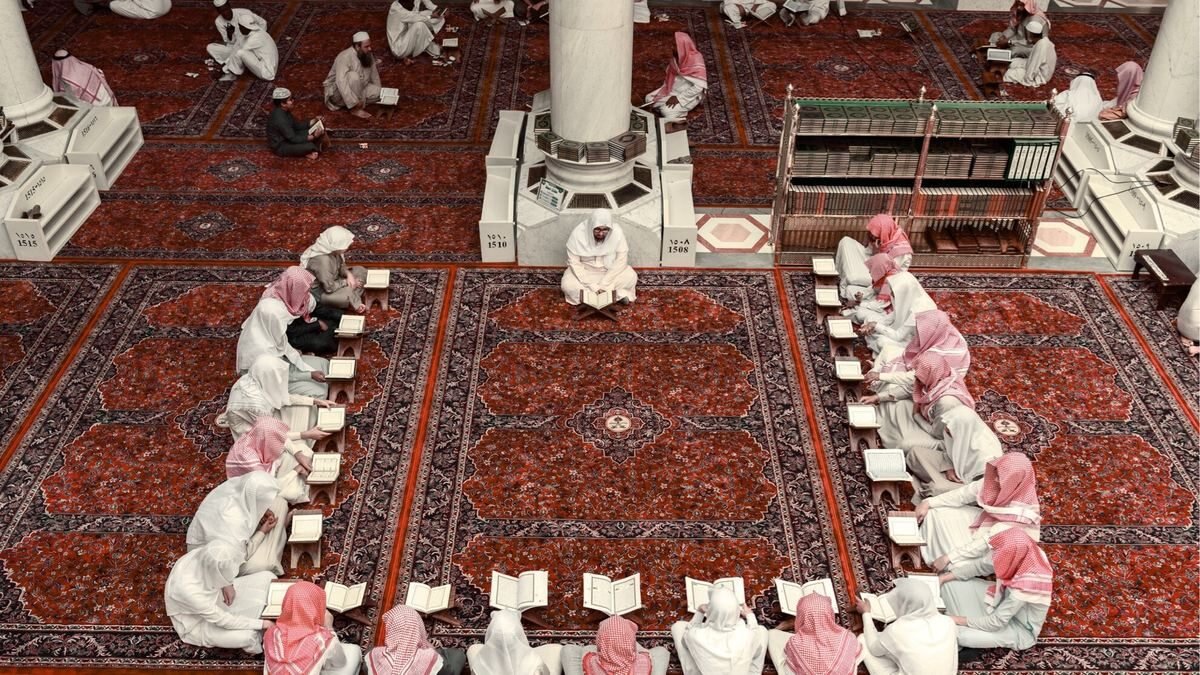
A Realistic Day
The mistake families make is not under-preparing. It is doing everything on the first day. A long flight from North America, then Umrah, then every prayer in the mosque, produces a household of exhausted children by day three — and a parent who spends the rest of the trip managing meltdowns instead of praying.
- Arrival day. Get to the hotel, eat, sleep. If your programme starts in Madinah, this is easy. If it starts in Makkah and your Ihram is already on, perform Umrah and then rest properly before anything else.
- Pick two prayers a day in the mosque, not five. Fajr and Maghrib work well for most families: one is quiet, the other is before bedtime. Pray the rest in the room without guilt.
- Build in one afternoon of nothing. Heat and crowds are cumulative. A day where the children swim, nap or watch something in the room buys you two better evenings.
- Split the hardest parts. One parent takes the children, the other prays or performs a voluntary Tawaf, then swap. A group that understands this will not make you feel you are missing out.
- Keep the ziyarah short. Two sites in a morning with children, not six. Our day-by-day guide to a first Umrah shows how a full programme is usually laid out.
Before you fly, prepare them for what they will see. Talk about the Kaaba and about the Prophet ﷺ, read an age-appropriate book about Umrah together, and teach two or three short duas they can say during Tawaf and Sa’i. Children who recognise the place when they arrive behave completely differently from children who have been brought somewhere loud and unfamiliar.
Rooms, Meals and What to Pack
Room occupancy is where family pricing is decided. A quad with two adults and two children is the most common family arrangement and the cheapest per person, and a triple gives more space for the same beds. What matters is confirming in writing how children are counted — whether an infant sharing a bed is priced, whether a child occupies a paid bed in the quad, and whether breakfast and dinner cover children. Our explainer on quad, triple and double occupancy shows how the maths works, and what a quality package actually includes covers the meals question.
For packing, the things parents actually run out of: wipes, a refillable water bottle each, snacks from home that your child already likes, closed comfortable shoes that are already broken in, a light long-sleeved layer for over-cooled hotel lobbies and coaches, any regular medicine in its original packaging, and a stroller you are willing to fold and carry up steps. Prams are not practical in the Mataf itself. A carrier is easier for anyone under two. The full list is in our Umrah packing guide from the USA, and health preparation, including which vaccinations to arrange in advance, is in our health guide.
The Honest Part
With a child under about four, you will not perform Umrah the way you would alone, and you should plan for that rather than discover it. You will do it in shifts. One parent worships while the other sits in a courtyard with a stroller; then you swap. You will leave prayers early. You will spend the quiet hours you imagined in a hotel room with a child who has decided it is playtime.
Two things make it much better. Travel with other families, so that children have company and adults can cover for each other — this is the single strongest argument for going with an organised group rather than alone. And go with a group that has children in it, where nobody is irritated by a crying toddler at Fajr because half the coach has one too.
The version of this trip that works is not the one where you do everything. It is the one where your children come home having seen the Kaaba, drunk Zamzam, and understood why the adults around them were crying. That is achievable with a four-year-old. Five prayers a day in the front row is not.
Travel with a group that expects families
See our upcoming Umrah departures, including the school-break dates, and ask how rooms and meals are arranged for children.
See Umrah Packages
WhatsApp +1 201-201-8992
Hisar Tour · A UAMA community organization · hisartour@uama.us
Common Questions
How old does a child have to be to perform Umrah?
There is no minimum age for Umrah. The minimum age of 15 in the Ministry’s FAQ applies to Hajj registration for citizens and residents inside Saudi Arabia, not to Umrah from abroad.
Does my child need their own visa and Umrah permit?
Yes to both. Every traveller needs their own passport and visa, and the Umrah permit is issued per person in Nusuk. Add each child and check that a permit exists in their name before you fly.
Does a child’s Umrah count as their obligation later?
An Umrah performed before puberty is valid and rewarded, but it does not take the place of the one performed as an adult. Ask your imam for the detail.
Can I take a stroller into the Mataf?
It is not practical in the Mataf itself, especially on the ground floor. Use it in the courtyards and on the upper levels, and carry a small child during Tawaf.
What do I do if my child gets lost?
Go to the nearest Guest Care Center — there are two main and 19 subsidiary centres across both mosques, open 24 hours, and lost children are among their stated services. Scouts in the courtyards also take in separated children while staff locate the family.
Is there anywhere to leave children while I pray?
In Madinah, yes: the Prophet’s Mosque runs a supervised children’s centre on the northeastern side, between the exits of courtyards 339 and 340, open daily from 5 am to 11 pm. Confirm the current conditions on arrival.
This guide gives general information with its sources. It is not a personal religious ruling; ask a qualified scholar about your own situation. Services and opening hours inside the Two Holy Mosques are operational arrangements and can change — confirm on arrival. Visa and permit requirements should be checked for your own nationality before you book. Last reviewed: September 2026.
Sources: Ministry of Hajj and Umrah, FAQ · SPA, Ministry Tawaf guidelines · SPA, Mataf capacity across levels · SPA, children’s ID wristband devices at Grand Mosque entrances · SPA, Grand Mosque scouts and lost children · SPA, Guest Care Centers at the Two Holy Mosques · SPA, children’s nursery centre at the Prophet’s Mosque · SPA, families bringing children to perform Umrah