
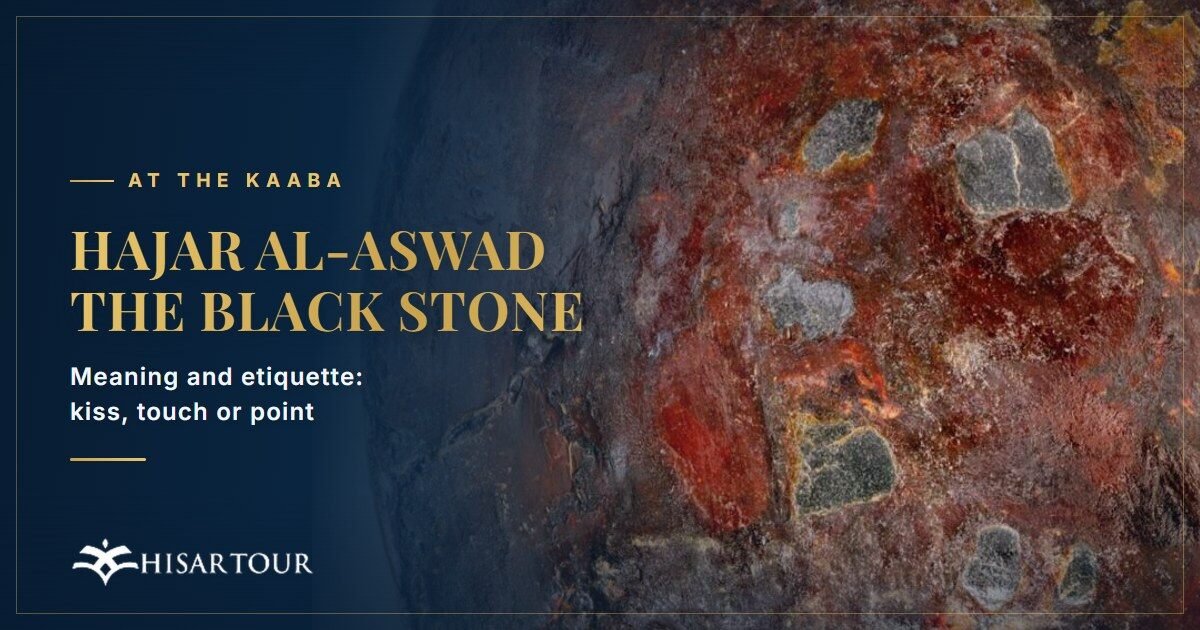
Every Tawaf begins and ends at the Black Stone. Kissing it is Sunnah, and so is pointing to it from a distance. Pushing to reach it is not.
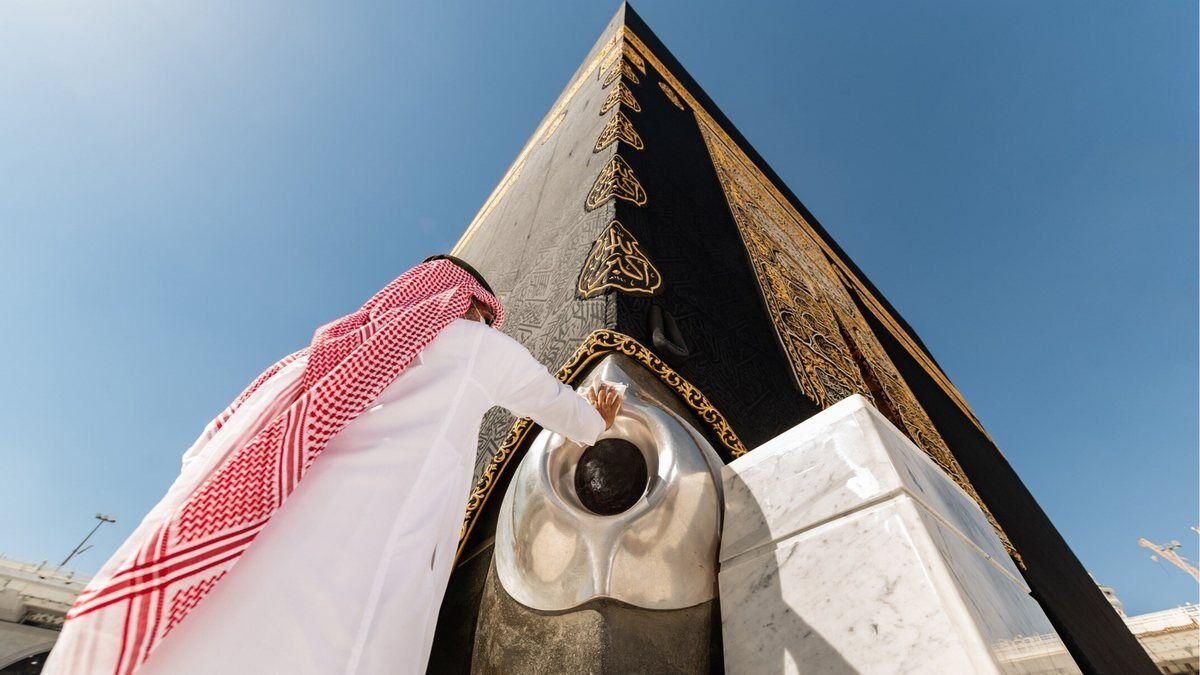
Hajar al-Aswad is the black stone set in a silver frame at the eastern corner of the Kaaba. The Prophet ﷺ kissed it, touched it, touched it with a stick, and also pointed to it from his camel while saying “Allahu Akbar”. Each of those is recorded in authentic hadith, which means a pilgrim who only points has not missed anything. This page sets out what the narrations say about the Stone’s meaning, and how to greet it in a crowd without harming anyone.
Most first-time pilgrims arrive with one picture of the Black Stone: someone pressed against the silver frame, kissing it. What they find is a dense crowd at the corner, and a decision to make within a few seconds of starting Tawaf. Knowing in advance which options the Sunnah gives you makes that decision easy. If you are planning to travel with a group, our Umrah packages page explains how our imams walk the group through Tawaf on the first day; everything below applies whoever you travel with.
The Importance and Spiritual Value of Hajar al-Aswad
Hajar al-Aswad, a black, shiny stone embedded in the eastern corner of the Kaaba, holds significant importance in Islamic tradition. Its spiritual value comes from what the Prophet ﷺ said about it and, above all, from what he did at it. Tawaf begins in line with this corner and each of the seven circuits ends there. Ibn Umar described the Prophet arriving in Makkah and kissing “the Black Stone Corner first while doing Tawaf” (Sahih al-Bukhari 1603), and Jabir reported that he entered the Masjid, touched the Stone, and then went to his right to begin the circuits (Jami‘ at-Tirmidhi 856, graded Sahih by Darussalam on sunnah.com).
Its importance can be summarized under four headings, each tied to a narration you can open and read yourself.
1. A Stone from Paradise
According to a hadith narrated by Ibn Abbas, our Prophet Muhammad (peace be upon him) stated that Hajar al-Aswad came down from Paradise and was whiter than milk, but it turned black due to the sins of the children of Adam. The narration is in Jami‘ at-Tirmidhi 877. On sunnah.com it carries the grade Hasan (Darussalam), and al-Tirmidhi himself called it hasan sahih.
This hadith highlights the sanctity of the Stone, and it also carries a lesson that is easy to miss. The blackening is described as the effect of sins, not of age. Pilgrims standing in front of it are standing in front of a reminder of why they came.
2. A Witness on the Day of Resurrection
Ibn Abbas also narrated that the Messenger of Allah ﷺ said about the Stone: “By Allah! Allah will raise it on the Day of Resurrection with two eyes by which it sees and a tongue that it speaks with, testifying to whoever touched it in truth” (Jami‘ at-Tirmidhi 961, graded Hasan by Darussalam on sunnah.com).
Two words in that narration deserve attention. The Stone testifies for those who touched it in truth, which ties the act to sincerity and to belief in tawhid rather than to the physical contact alone. And the testimony is something Allah brings about; the Stone has no power of its own, which is exactly the point Umar made out loud.
3. Symbol of Monotheism: What Umar Said
The act of greeting Hajar al-Aswad expresses the Islamic principle of tawhid (the oneness of Allah), and the clearest statement of why comes from Umar ibn al-Khattab. Abis bin Rabi‘a narrated that Umar came near the Black Stone, kissed it and said: “No doubt, I know that you are a stone and can neither benefit anyone nor harm anyone. Had I not seen Allah’s Messenger (ﷺ) kissing you I would not have kissed you” (Sahih al-Bukhari 1597; similar wording in Sahih Muslim 1270).
4. The Sunnah of the Prophet
Our Prophet Muhammad (peace be upon him) practiced the Sunnah of kissing and greeting Hajar al-Aswad, and the companions recorded the different ways he did it. Nafi reported that Ibn Umar said he never missed touching the Black Stone and the Yemeni corner, “both in the presence and the absence of crowds, since I saw the Prophet (ﷺ) touching them” (Sahih al-Bukhari 1606). Nafi also described Ibn Umar touching the Stone with his hand and then kissing his hand, following the example of the Prophet since he first witnessed it (Sahih Muslim 1268b).
The same books record the Prophet performing Tawaf on a camel during his Farewell Pilgrimage. Ibn Abbas said that “every time he came in front of the Corner (having the Black Stone), he pointed towards it with something he had with him and said Takbir” (Sahih al-Bukhari 1613), and in another narration that he would “say, ‘Allahu-Akbar’” (Sahih al-Bukhari 1632). Abu Tufail saw him touch the corner with a stick and then kiss the stick (Sahih Muslim 1275). Aisha explained in a related narration that he did not like people to be pushed away from him (Sahih Muslim 1274).
That variety is the practical heart of this page. The Sunnah at the Black Stone is not a single act; it is a set of acts, and the easier ones were done by the Prophet himself.
Etiquette: Kiss, Touch or Point
Put together, the narrations above give three ways to greet the Stone at the start of Tawaf and each time you pass it. They are listed here from the hardest to reach to the easiest.
| Way | What you do | Hadith (sunnah.com) | When it fits |
|---|---|---|---|
| Kiss | Kiss the Stone itself | Bukhari 1597, 1610; Muslim 1270 | Only if you can reach it without pushing anyone |
| Touch | Touch it with your hand and kiss your hand; or touch it with something you hold and kiss that | Muslim 1268b; Muslim 1275 | When you are close but cannot kiss it |
| Point | Face the Stone from where you are, raise your hand toward it and say Allahu Akbar | Bukhari 1613, 1632 | Whenever the crowd is between you and the Stone |
Swipe the table sideways to see every column.
Scholars use the word istilam for greeting the Stone by touching it, and many describe pointing as standing in its place when touching is not possible. The schools differ on small details: for example whether to kiss the hand after only pointing, how far to raise it, and what else to say besides the takbir. None of these differences touches the main point, and your imam or a scholar you trust can tell you the practice of your own madhhab.
The One Rule in the Crowd
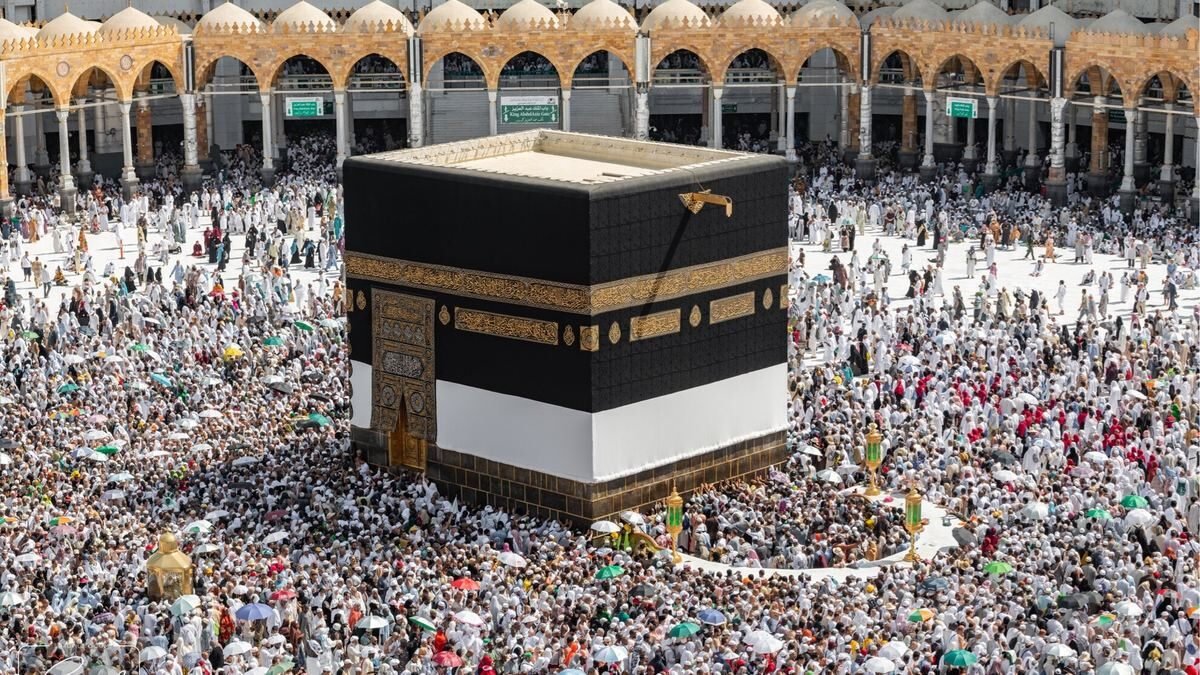
The clearest instruction about the crowd at the Stone was given to the strongest of the companions. Umar ibn al-Khattab narrated that the Prophet ﷺ told him: “O ‘Umar, you are a strong man. Do not crowd others to touch the Black Stone, lest you harm the weak. If you find a gap, then touch it, otherwise turn to face it and say Lailaha illallah, and Allahu akbar” (Musnad Ahmad 190, graded Hasan by Darussalam on sunnah.com).
A practical way to think about it: decide before you enter the Mataf. If the rows in front of the corner are clearly thin when you arrive, you may be able to touch or kiss the Stone calmly. If they are not, point, say the takbir, and keep walking. Changing your mind halfway into the crush is where most of the pushing starts.
Common Misunderstandings
- “My Tawaf is incomplete if I do not touch the Stone.” The Prophet ﷺ completed Tawaf pointing at it from his camel (Sahih al-Bukhari 1613). Pointing is part of the Sunnah, not a lesser substitute you should feel bad about.
- “The Stone brings blessing by itself.” Umar’s words at the Stone answer this directly: it can neither benefit nor harm (Sahih al-Bukhari 1597). The reward is in following the Sunnah.
- “I should wipe my clothes or belongings on it.” None of the narrations above describe this. The recorded acts are kissing, touching, touching with something held, and pointing.
- “Pushing is acceptable because everyone else is doing it.” The Prophet’s instruction to Umar was given exactly for a crowded corner (Musnad Ahmad 190). Our list of common Umrah mistakes puts pushing to kiss the Black Stone among the mistakes of manners for this reason.
The Stone and the Rest of the Kaaba
The Black Stone is one of several places at the Kaaba that pilgrims ask about. The last corner you pass before returning to it on each circuit is the Yemeni corner (Rukn al-Yamani). Ibn Umar reported that he saw the Prophet touching only these two corners of the House (Sahih al-Bukhari 1609). The Multazam, Hijr Ismail and the station of Ibrahim are covered in our page on acts of worship at the Kaaba.
Conclusion
While Hajar al-Aswad is a physical stone, it is considered a spiritual symbol within Islamic belief. It represents Muslims’ commitment to Allah, their belief in tawhid, and their adherence to the Sunnah of the Prophet Muhammad. By greeting Hajar al-Aswad in the way he did, whether with a kiss, a touch or a raised hand, Muslims reaffirm their faith and their connection to their spiritual heritage. For those undertaking pilgrimage, understanding the significance of Hajar al-Aswad deepens the experience of Hajj or Umrah, and knowing that pointing is a complete Sunnah removes the pressure that leads people to push.
Make your first Tawaf with an imam beside you
On our group Umrahs the imam leads Tawaf step by step, including where to stand for the Black Stone and how to keep your count.
See upcoming Umrah departures WhatsApp +1 201-201-8992A UAMA community organization
Is it Sunnah to kiss the Black Stone?
Yes. Umar ibn al-Khattab kissed it and said he did so only because he had seen the Prophet ﷺ kissing it (Sahih al-Bukhari 1597). It is a Sunnah to do when you can reach the Stone without harming anyone; the Prophet also pointed to it from a distance, so pointing follows his practice too.
What do I say when I point to the Black Stone?
Ibn Abbas reported that the Prophet pointed toward the Corner and said “Allahu Akbar” (Sahih al-Bukhari 1632). In the narration where he advised Umar, he said to face the Stone and say “La ilaha illallah” and “Allahu akbar” (Musnad Ahmad 190, graded Hasan). Your imam can show you the wording followed in your madhhab.
Where is the Black Stone on the Kaaba?
It is set in a silver frame at the eastern corner of the Kaaba, at the point where Tawaf begins and ends. The last corner you pass before reaching it again on each circuit is the Yemeni corner.
Is my Tawaf valid if I never touched the Black Stone?
The Prophet ﷺ himself performed Tawaf pointing to the Stone from his camel (Sahih al-Bukhari 1613), and nothing in the narrations makes reaching it a condition of Tawaf. If you have a specific doubt about a Tawaf you have already performed, ask a scholar or your group’s imam.
Why is the Black Stone black?
According to a hadith narrated by Ibn Abbas, it descended from Paradise whiter than milk and was blackened by the sins of the children of Adam (Jami‘ at-Tirmidhi 877, graded Hasan on sunnah.com).
Hadith texts quoted on this page are the English translations published on sunnah.com and were read there on 9 October 2026, with the grades sunnah.com shows for collections other than Sahih al-Bukhari and Sahih Muslim. Questions of fiqh, including the details of istilam and pointing in your own school, should be put to a qualified scholar or your group’s imam. Correction (October 2026): an earlier version of this page attributed to Ali ibn Abi Talib a statement linking the Stone to the covenant of souls; we could not trace that statement to a graded narration, so the section now uses the Prophet’s words recorded in Jami‘ at-Tirmidhi 961. The spelling has also been corrected to Hajar al-Aswad. Last reviewed: October 2026.
Sources: Sahih al-Bukhari 1597 · Sahih al-Bukhari 1603 · Sahih al-Bukhari 1606 · Sahih al-Bukhari 1609 · Sahih al-Bukhari 1613 · Sahih al-Bukhari 1632 · Sahih Muslim 1268b · Sahih Muslim 1270 · Sahih Muslim 1274 · Sahih Muslim 1275 · Jami‘ at-Tirmidhi 856 · Jami‘ at-Tirmidhi 877 · Jami‘ at-Tirmidhi 961 · Musnad Ahmad 190