
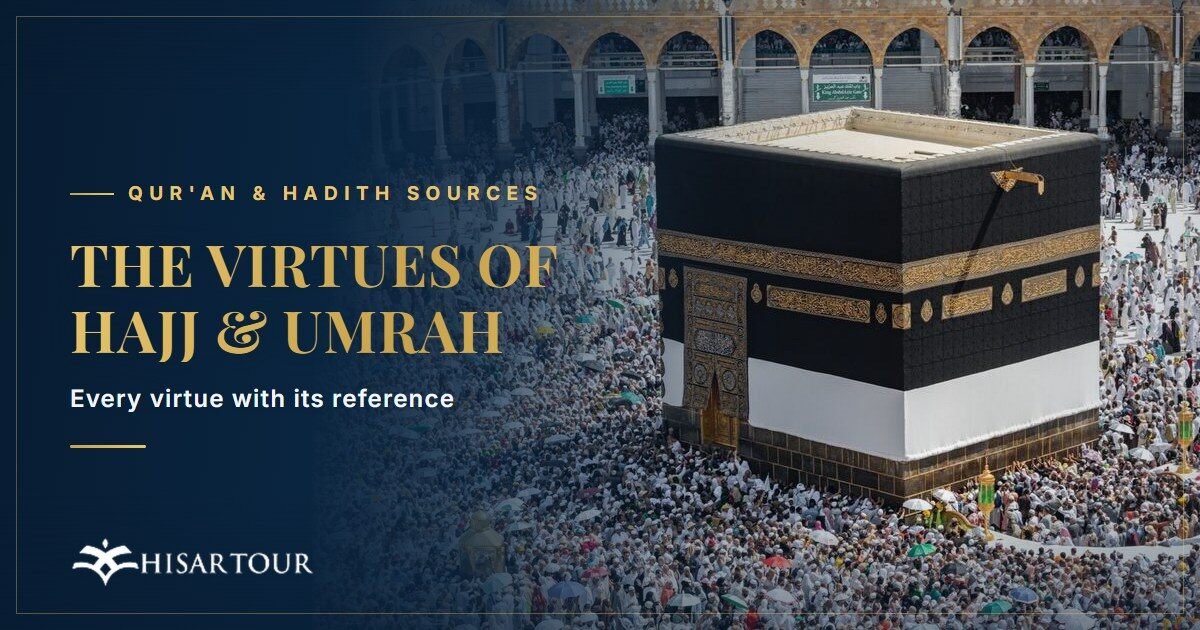
Hajj is one of the five pillars of Islam, owed once in a lifetime by every Muslim who is able. Its best-known virtue: a Hajj performed without obscenity or wrongdoing returns the pilgrim as on the day he was born.
Umrah carries its own promise. The Prophet said one Umrah to the next is an expiation for the sins between them, and that the reward of an accepted Hajj is nothing less than Paradise (Sahih al-Bukhari 1773). This page sets out the virtues of Hajj and Umrah with their Qur’an and hadith references, what an “accepted” pilgrimage asks of you, and what the journey means for the people around you: the fellow pilgrims you help and the family you go with or come home to. For Hajj on its own, see ten benefits of Hajj with their sources.
Most pages on this subject list virtues without saying where they come from. Here every virtue carries its reference, and the hadith outside Bukhari and Muslim carry the grading shown on sunnah.com. This page also brings together two of our older articles, on charity during the pilgrimage and on its effect on family and society, so the whole subject sits in one place. When you are ready to plan, our Hajj 2027 page explains how registration works from the USA, and our Umrah packages list upcoming departures.
The Importance and Virtues in Brief
Hajj and Umrah are fundamental acts of worship in Islam, and their significance comes down to a few points that the rest of this page sources one by one:
- A foundational obligation. Hajj is one of the foundational elements of the faith; the performance of it, once, is among a Muslim’s obligations when able. Umrah, according to two of the four schools, is an obligation too.
- Purification and closeness to Allah. Performed sincerely and properly, both give individuals a chance to purify themselves, to cleanse the record of past transgressions and to strengthen their relationship with Allah. The absolution of sins is one of the most important rewards promised for them.
- Entrance to Paradise. An accepted Hajj, made with the right intention, is described as a means to attain the pleasure of Allah and entrance to Paradise in the hereafter. Its rewards are immense.
- Unity on a global scale. The collective assembly of pilgrims builds fraternity, cooperation and a spirit of togetherness, reinforcing the bonds of the larger global community of Muslims.
- The legacy of the prophets. Emulating the actions of Abraham (Ibrahim) and Muhammad, peace be upon them, keeps their tradition alive and connects the pilgrim closely to it.
- Lessons in perseverance. The physical and emotional challenges of these journeys cultivate patience, humility and spiritual growth.
- Prayers and Zamzam. Pilgrims engage in dua with special hope of acceptance, especially in Tawaf, and drinking Zamzam water with an intention is sought for nourishment and healing.
- A life transformed. Many return with a heightened sense of responsibility and a better understanding of the faith’s teachings, more mindful of their obligations and with a deeper connection to Allah.
The atmosphere of the sacred places deepens devotion for most people visiting them for the first time, and the shared experience of these pilgrimages offers numerous blessings and opportunities beyond the rites themselves. The sections below give the source for each point, so you can see which rest on a hadith and which are the lived experience of pilgrims.
Hajj as a Pillar, Umrah by School
Hajj is one of the Five Pillars of Islam: the Prophet listed it among the five principles on which Islam is built (Sahih al-Bukhari 8). The Qur’an makes it a duty owed to Allah “for whoever is able to find thereto a way” (Qur’an 3:97), which is why it is mandatory once in a lifetime for every Muslim with the physical and financial capability, and not before. The same passage describes the House in Makkah as “the first House [of worship] established for mankind… blessed and a guidance for the worlds” (Qur’an 3:96).
Umrah has a different status. The Qur’an pairs them, “And complete the Hajj and Umrah for Allah” (Qur’an 2:196), but the schools of thought differ on whether Umrah is obligatory. The Hanafi and Maliki schools generally hold it to be a highly recommended sunnah (sunnah mu’akkadah); the Shafi’i and Hanbali schools hold it to be obligatory once in a lifetime for those able. Follow the position of your own school, and ask your imam if you are unsure. Our comparison of Hajj vs Umrah covers the practical differences.
The Virtues, With Their Sources
| Virtue | What the hadith says | Reference | Grading |
|---|---|---|---|
| Forgiveness of sins | Hajj without obscenity or wrongdoing returns you as on the day you were born | Bukhari 1521; Muslim 1350 | Sahih |
| A gateway to Paradise | The reward of an accepted Hajj is nothing but Paradise | Bukhari 1773 | Sahih |
| Umrah expiates | One Umrah to the next expiates the sins between them | Bukhari 1773 | Sahih |
| Among the best deeds | Asked which deed is best, the Prophet listed accepted Hajj among them | Bukhari 1519 | Sahih |
| For women | The best jihad for women is an accepted Hajj | Bukhari 1520 | Sahih |
| The Day of Arafah | No day on which Allah frees more servants from the Fire | Muslim 1348 | Sahih |
| Poverty and sins removed | Follow Hajj with Umrah; they remove poverty and sins as bellows remove impurity | Tirmidhi 810; Nasa’i 2631 | Hasan (Darussalam) |
| Guests of Allah | The pilgrim for Hajj and Umrah is a delegation: they ask, and He gives | Nasa’i 2625; Ibn Majah 2893 | Sahih; Hasan (Darussalam) |
| Umrah in Ramadan | Equal to Hajj in reward | Bukhari 1782; Muslim 1256 | Sahih |
Swipe the table sideways to see every column. Wording is paraphrased; follow the links in the Sources for the full text.
Two of these deserve a closer look. The Day of Arafah hadith continues: Allah “draws near, then praises them to the angels, saying: What do they want?” (Sahih Muslim 1348). And the description of pilgrims as a delegation who were invited, responded, and are given what they ask (Sunan Ibn Majah 2893) is the authentic basis for the common belief that the supplications of pilgrims are answered. It is a better source than the vague “it is widely believed” that our older version of this page relied on.
What an Accepted Hajj Asks of You
Almost every virtue above is attached to a condition: Hajj that is mabrur, accepted, or performed “without obscenity or wrongdoing”. The Qur’an names the boundaries directly: once you have entered the state of ihram for Hajj, “there is [to be for him] no sexual relations and no disobedience and no disputing during Hajj” (Qur’an 2:197). The forgiveness hadith repeats the first two (Sahih al-Bukhari 1521).
In practice, the hardest of the three for most pilgrims is the last. Disputes start in airport queues, over bus seats, over rooms and over who was first at the water cooler. A pilgrimage can be technically complete and still fall short of this standard. That is the honest reason to prepare your character as well as your paperwork, and the reason our pages on spiritual preparation for Hajj and Umrah and the rules of ihram sit side by side.
What the Journey Teaches
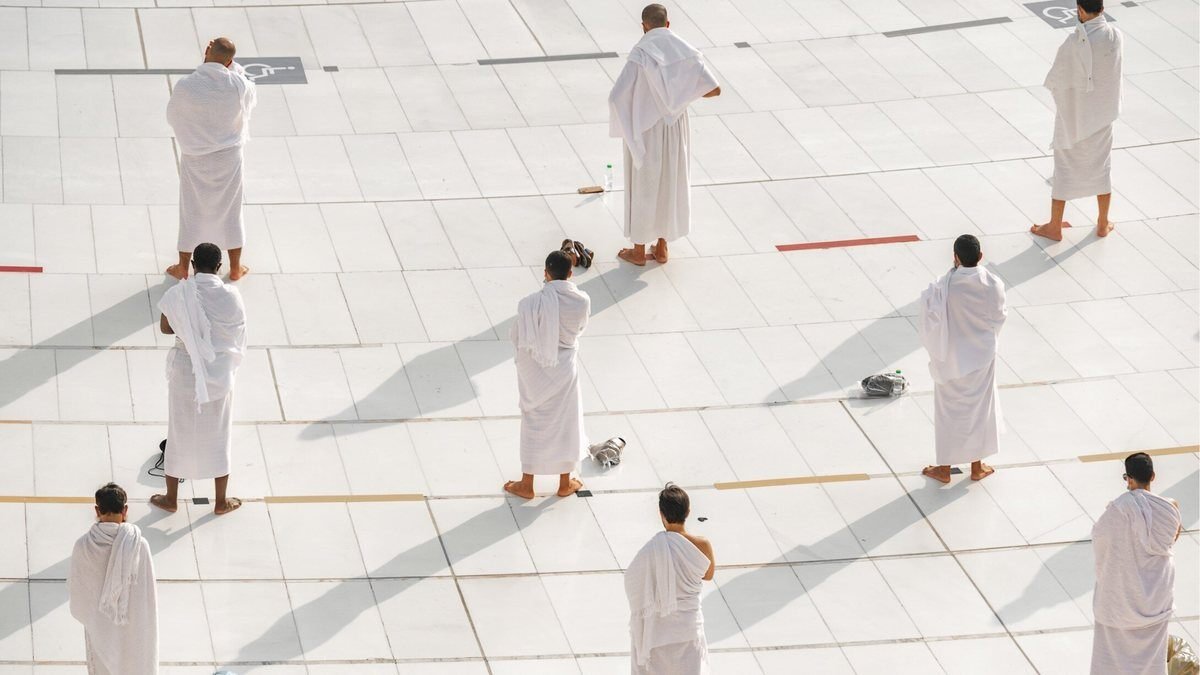
- Unity and brotherhood. The gathering of Muslims from all corners of the world, dressed alike and moving towards one purpose, makes the equality of believers visible in a way nothing else does. Wealth and status do not change the rituals.
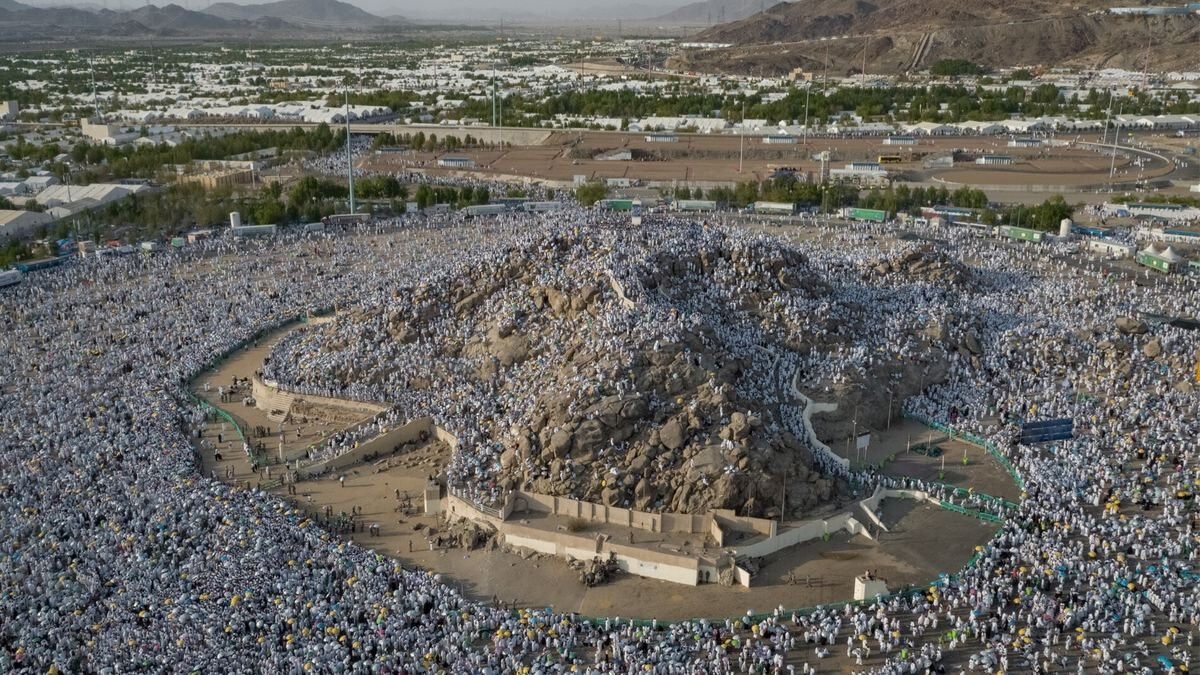
- A reflection of the Day of Judgment. Millions standing together in white at Arafat is, for many pilgrims, the closest reminder they will have of the gathering on the Last Day, and it encourages them to contemplate life, death and the afterlife.
- Following in the footsteps of the prophets. The rites keep alive the traditions of Prophets Ibrahim and Muhammad, peace be upon them: the House that Ibrahim raised, the Maqam where he stood, the Sa’i between Safa and Marwah. Our guide to worship at the Kaaba covers the places and their sources.
- Training in patience and sacrifice. Heat, crowds, fatigue and other people’s habits are part of the journey. Patience with them is part of the worship, not a distraction from it.
- Spiritual peace and renewal. Tawaf, prayer in the two Holy Mosques, dua, and the Zamzam water that “is for whatever it is drunk for” (Sunan Ibn Majah 3062, hasan) give many pilgrims an inner peace and gratitude they carry home.
Many pilgrims describe Hajj or Umrah as a turning point: they return with a greater sense of responsibility, more conscious of their religious duties and more motivated to keep them. That life transformation is the lasting benefit, and it is also the part that depends most on what you do after you land. Our page on what to do after returning from Umrah is about keeping it.
Charity and Mutual Support on the Road
The Qur’an’s verse on the boundaries of Hajj ends with encouragement rather than prohibition: “And whatever good you do, Allah knows it. And take provisions, but indeed, the best provision is fear of Allah” (Qur’an 2:197). Elsewhere it commands believers to cooperate in righteousness and piety (Qur’an 5:2), and the verse on the sacrificial animals of Hajj ends “So eat of them and feed the miserable and poor” (Qur’an 22:28). Islam builds sharing into worship through zakat and sadaqah; the pilgrimage gives it daily, practical form, and strengthens solidarity among people who were strangers a week earlier.
What that looks like in a group, from our older article on the subject:
- Material assistance. Sharing food, water and space, and quietly helping a fellow pilgrim with limited resources.
- Spiritual support. Encouraging someone who is struggling, motivating a tired roommate to make the next prayer, explaining a rite to a first-timer without making them feel small.
- Acts of service. Distributing water, helping the elderly through crowds, guiding the lost back to their group. Simple acts, and the ones pilgrims remember.
If you are performing Hajj, the Hady sacrifice is itself an act of feeding others; our page on the Hady explains how it is arranged today.
Family and Society
The hadith speak directly about family. A woman lifted up a small boy to the Prophet and asked whether this child would be credited with Hajj; he said, “Yes, and you will have a reward” (Sahih Muslim 1336). A woman from the tribe of Khath’am asked whether she could perform the obligatory Hajj on behalf of her elderly, weak father, and the Prophet allowed it (Sahih al-Bukhari 1513). Our page on Hajj on behalf of someone else explains how that works now.
Families who travel together describe the effect on family bonds in similar terms: worshipping together around a common purpose, learning patience and sacrifice from the obstacles on the way, and practising the Islamic morals of tolerance, respect and empathy among people from diverse cultures. Some families start traditions from it, such as a gathering for relatives on their return. Children and elderly parents need their own planning; our guides to Umrah with children and Umrah with elderly parents cover it.
The effect reaches the wider community too. Pilgrims who come back with renewed spiritual awareness often carry it into their mosques and neighbourhoods: helping others, sharing, honesty and justice become more visible, and communal ties are enhanced. That positive influence, spreading moral values and strengthening social unity, is one of the reasons communities celebrate their returning pilgrims.
Planning Hajj 2027 or an Umrah this year?
Start with the facts: how Hajj registration works from the USA, and which Umrah departures fit your family’s dates.
Hajj 2027 from the USA WhatsApp +1 201-201-8992A UAMA community organization
What is the reward of an accepted Hajj?
The Prophet said the reward of an accepted (mabrur) Hajj is nothing except Paradise (Sahih al-Bukhari 1773), and that whoever performs Hajj without obscenity or wrongdoing returns as on the day he was born (Sahih al-Bukhari 1521).
What is the virtue of Umrah?
One Umrah to the next is an expiation for the sins committed between them (Sahih al-Bukhari 1773), and an Umrah in Ramadan is equal to Hajj in reward (Sahih al-Bukhari 1782; Sahih Muslim 1256). It does not replace the obligatory Hajj.
Is Umrah obligatory?
Scholars differ. The Hanafi and Maliki schools generally consider it a highly recommended sunnah; the Shafi’i and Hanbali schools consider it obligatory once in a lifetime for those able. Follow your own school and ask your imam.
Are the prayers of pilgrims answered?
The Prophet described those performing Hajj and Umrah as a delegation to Allah: He invited them, they responded, and they ask and He gives (Sunan Ibn Majah 2893, graded hasan by Darussalam). Make the most of your dua during the journey.
Does a child’s Hajj count?
A child’s Hajj is valid and the parent is rewarded (Sahih Muslim 1336), but scholars agree it does not replace the obligatory Hajj the child will owe as an adult who is able.
Hadith references give the collection and number as listed on sunnah.com, with the grading shown there for collections outside Sahih al-Bukhari and Sahih Muslim; Qur’an translations are from quran.com (Sahih International). Where scholars differ, we have said so; for rulings on your own situation, ask a scholar or your group’s imam. This page now also covers the content of our earlier articles on charity and mutual support during Hajj and Umrah and on the impact of Umrah on family and society. Last reviewed: October 2026.
Sources: Sahih al-Bukhari 8 · Sahih al-Bukhari 1521 · Sahih Muslim 1350 · Sahih al-Bukhari 1773 · Sahih al-Bukhari 1519 · Sahih al-Bukhari 1520 · Sahih Muslim 1348 · Jami’ at-Tirmidhi 810 · Sunan an-Nasa’i 2631 · Sunan an-Nasa’i 2625 · Sunan Ibn Majah 2893 · Sahih al-Bukhari 1782 · Sahih Muslim 1256 · Sahih Muslim 1336 · Sahih al-Bukhari 1513 · Sunan Ibn Majah 3062 · Qur’an 3:96–97 · Qur’an 2:196–197 · Qur’an 5:2 · Qur’an 22:28