
Umrah is four acts, done in order: enter Ihram at the Miqat, circle the Kaaba seven times (Tawaf), walk between Safa and Marwah seven times (Sa’i), then shave or trim your hair.
From your first step into the Haram to your last cut of hair, the whole Umrah usually takes two to four hours depending on the crowd.* Everything else — the words, the sunnah acts, the rules of Ihram — sits inside those four steps. This guide walks through each one exactly as our imams teach it to first-time pilgrims before every departure. On a Hisar Tour group you perform every step behind an imam on a headset — so read this as your preparation, not your only guide.
Almost every first-time pilgrim tells us the same thing on the way home: “I wish I had understood it this clearly before I went.” Umrah is not complicated — but it is unfamiliar, it happens in a crowd, and you will be tired when you do it. That combination is why people freeze at the Black Stone line, lose count in Tawaf, or come out of Ihram too early. The cure is knowing the sequence so well that you could explain it to someone else. Read this once at home, once on the plane, and once more the night before, and you will walk into Masjid al-Haram knowing exactly what comes next.
The Four Acts of Umrah at a Glance
All four schools of Islamic law agree that Umrah consists of these four acts. They differ on the label — whether an act is a pillar (rukn) whose omission invalidates the Umrah, or an obligation (wajib) whose omission must be compensated with a sacrifice (dam). For you, the practical answer is identical: do all four, in this order.
| Act | What it is | Where | Ruling by school |
|---|---|---|---|
| 1. Ihram | The intention to perform Umrah, made in the state of Ihram with its garments and restrictions | At or before the Miqat | Pillar in the Shafi’i, Maliki and Hanbali schools; a condition (shart) in the Hanafi school |
| 2. Tawaf | Seven counter-clockwise circuits of the Kaaba, starting and ending at Hajar al-Aswad | Masjid al-Haram, Makkah | Pillar in all four schools |
| 3. Sa’i | Seven laps between the hills of Safa and Marwah, starting at Safa | The Mas’a inside Masjid al-Haram | Pillar in the Shafi’i, Maliki and Hanbali schools; obligatory (wajib) in the Hanafi school |
| 4. Halq or Taqsir | Shaving the head (men) or trimming the hair; this ends the state of Ihram | Barbers by the Marwah exit, or your hotel | Pillar in the Shafi’i school; obligatory in the Hanafi, Maliki and Hanbali schools |
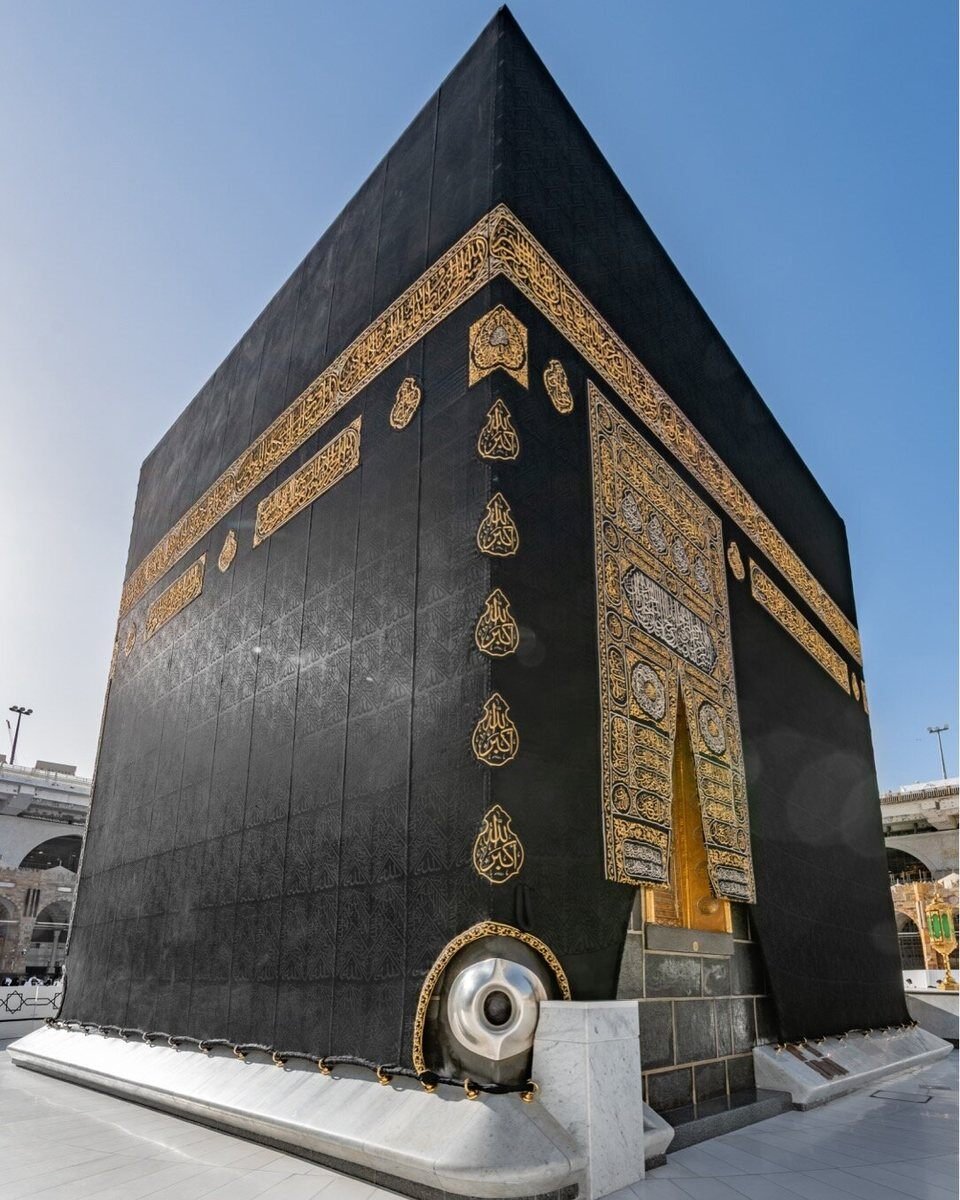
Before You Enter Ihram: Preparation
Ihram begins with an intention, but the preparation begins in your hotel room — or, if you are flying straight to Jeddah, at home or in the departure lounge. The Sunnah preparations are these:
- Ghusl (full bath). Recommended for everyone entering Ihram, including women who are menstruating. Trim nails, remove unwanted body hair and tidy the moustache or beard before the bath, because none of this is allowed once you are in Ihram.
- Perfume — on the body, not the garments. Men may apply scent to the body before making the intention; Aisha reported that she perfumed the Messenger of Allah (peace be upon him) for his Ihram before he entered it (Sahih al-Bukhari 1539; Sahih Muslim 1189). Do not perfume the Ihram sheets themselves.
- Men: two unstitched sheets. The lower sheet (izar) wrapped around the waist, the upper sheet (rida’) over the shoulders. No underwear, no stitched garments, no socks or closed shoes; sandals and a belt or money pouch are fine. Head uncovered.
- Women: normal modest clothing. There is no special Ihram dress for women. Any loose, non-transparent clothing in any color is Ihram; white is custom, not law. The two things a woman in Ihram does not wear are a face veil fastened over the face (niqab) and gloves (Sahih al-Bukhari 1838); if she wishes to screen her face from men she lets a cloth hang from the head without tying it to the face.
- Two rak’ahs. It is Sunnah to pray two units before the intention — ideally after an obligatory prayer — wearing the Ihram garments. Do not make the intention yet; that comes at the Miqat.
Step 1: Ihram at the Miqat
The Miqat is the boundary you may not cross toward Makkah without being in Ihram. The Prophet (peace be upon him) fixed Dhul-Hulayfah for the people of Madinah, al-Juhfah for those coming from Syria, Qarn al-Manazil for Najd and Yalamlam for Yemen, adding that they are also for anyone who passes through them on the way to Hajj or Umrah (Sahih al-Bukhari 1524; Sahih Muslim 1181). For travelers from the United States and Canada, two cases cover almost everyone:
| Your itinerary | Your Miqat | What it looks like in practice |
|---|---|---|
| Madinah first, then Makkah (most Hisar Tour groups) | Dhul-Hulayfah (Abyar Ali), about 20 minutes’ drive from Madinah on the road to Makkah | Bathe and dress in Ihram at your Madinah hotel. The coach stops at the Miqat mosque; you pray two rak’ahs, make the intention, begin the Talbiyah and continue to Makkah. |
| Flying into Jeddah with Makkah first | The Miqat line your aircraft crosses before landing — for flights from Europe and the Americas usually the al-Juhfah line; crews typically announce it about an hour before landing in Jeddah | Put on the Ihram garments before boarding the final flight (or at the layover). When the crew announces the Miqat — or a little earlier, to be safe — make the intention and begin the Talbiyah in your seat. |
The intention is what enters you into Ihram; the garments alone do not. Say: “Labbayka Allahumma ‘Umratan” — Here I am, O Allah, for Umrah. If you fear something may prevent you from completing it (illness, a flight), you may add the condition the Prophet (peace be upon him) taught: “and if something prevents me, then my place of release is wherever You hold me” (Sahih al-Bukhari 5089; Sahih Muslim 1207).
Labbayk Allahumma labbayk. Labbayka la sharika laka labbayk. Innal-hamda wan-ni’mata laka wal-mulk. La sharika lak.
Here I am, O Allah, here I am. Here I am, You have no partner, here I am. Truly all praise, favor and sovereignty are Yours. You have no partner. (Sahih al-Bukhari 1549; Sahih Muslim 1184.) Men raise their voices; women say it quietly. Repeat it on the coach, in the hotel lift, walking to the mosque — and stop when you begin Tawaf.
From the moment of the intention you are a muhrim. The restrictions below apply until Step 4 is complete — usually four to seven hours later for a Madinah-first group, longer if you are flying into Jeddah.
The Rules of Ihram: What Is Not Allowed — and What Is
Ihram prohibits nine things — cutting hair or nails, perfume, stitched clothing and head covering for men, a fastened face veil and gloves for women, marriage contracts, intimacy, hunting and quarrelling — and leaves everything else in ordinary life allowed. The two lists below are what our imams hand out before the Miqat.
- Cutting or removing any hair, from anywhere on the body
- Cutting nails
- Applying perfume or scented products (scented soap, wipes, lotion)
- Men: stitched clothing shaped to the body — shirts, trousers, underwear, socks — and covering the head (cap, hood, turban)
- Women: a face veil tied over the face, and gloves
- Marriage contracts and proposals
- Sexual relations and everything that leads to them
- Hunting or harming land animals
- Arguing, quarrelling and obscene talk (Qur’an 2:197)
- Showering with unscented soap; changing into a clean set of Ihram sheets
- Sandals, a belt or money pouch, a wristwatch, glasses, a wedding ring, a face mask, hearing aids
- Shading yourself under an umbrella, a roof, a bus, or a hand-held fan — only a head covering that touches the head is the issue for men
- A blanket over the body on a cold flight or coach (not over the head, for men)
- Unscented medication, bandages, insulin
- Women wearing any color, socks, closed shoes and jewelry
- Ordinary conversation, phone calls, eating, sleeping
Step 2: Tawaf — Seven Circuits of the Kaaba
Tawaf is seven counter-clockwise circuits of the Kaaba, each beginning and ending at the Black Stone line, performed in wudu with the Kaaba on your left. You will arrive at Masjid al-Haram in Ihram, probably tired, probably emotional. Take a moment. Then follow the sequence below; nothing in it is difficult, and your imam will be on the headset the entire time. If you need to renew your wudu first, see where the restrooms and wudu areas are in the Haram.
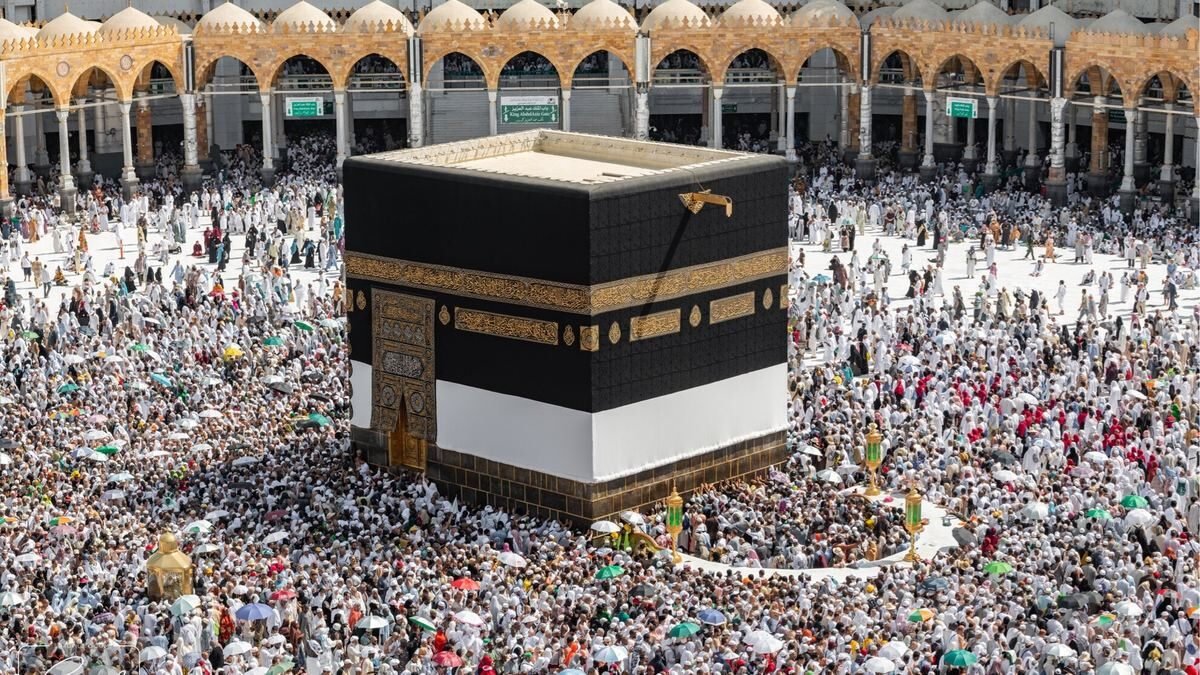
Tawaf requires ritual purity: make wudu at the hotel and keep it (the mosque has ablution areas, but they are a walk away). Enter with the right foot and the usual dua for entering a mosque: “Allahumma-ftah li abwaba rahmatik” — O Allah, open for me the gates of Your mercy (Sahih Muslim 713). When you first see the Kaaba, raise your hands and make any dua you wish; there is no fixed wording for this moment. Men now uncover the right shoulder by passing the upper sheet under the right arm (this is idtiba’, done only during this Tawaf).
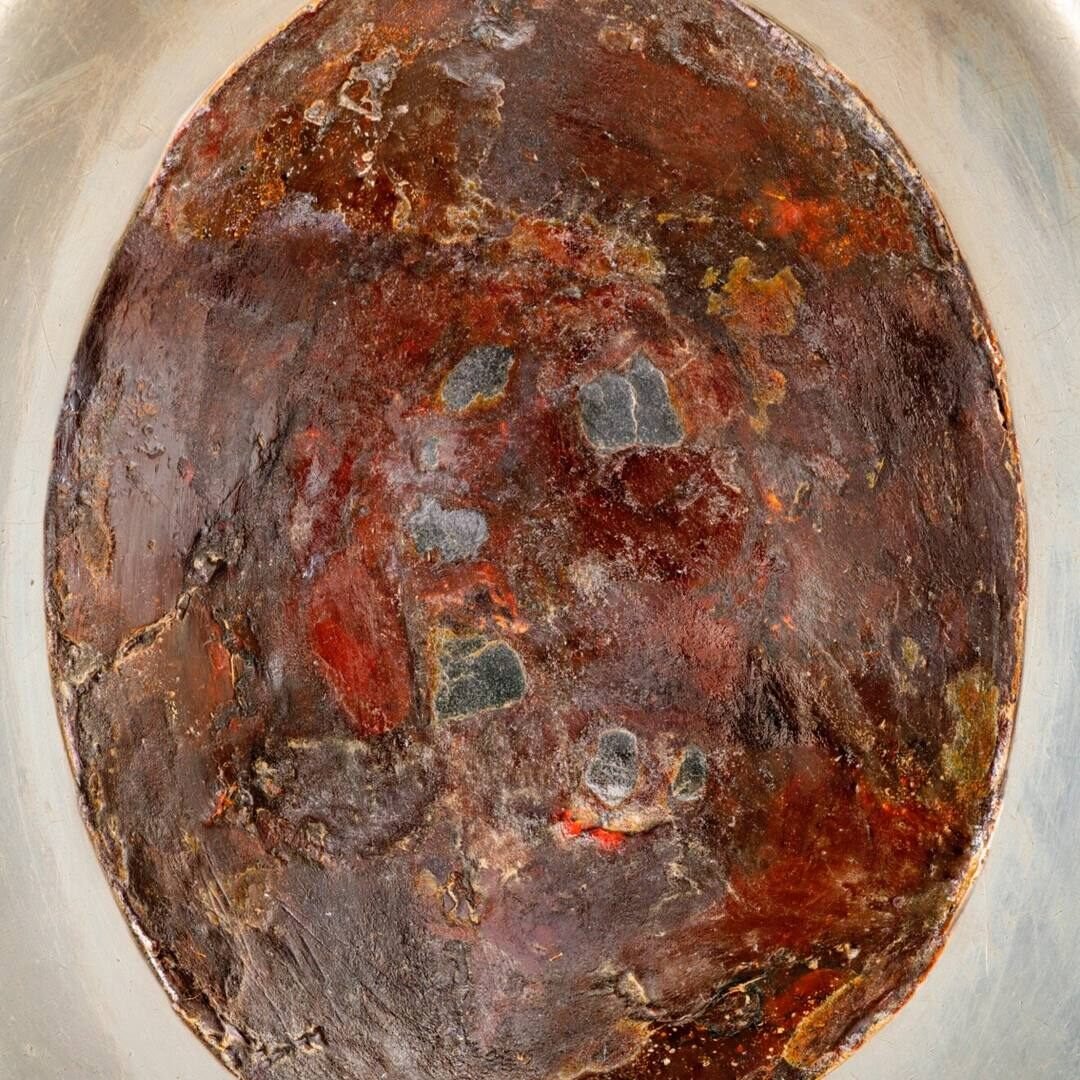
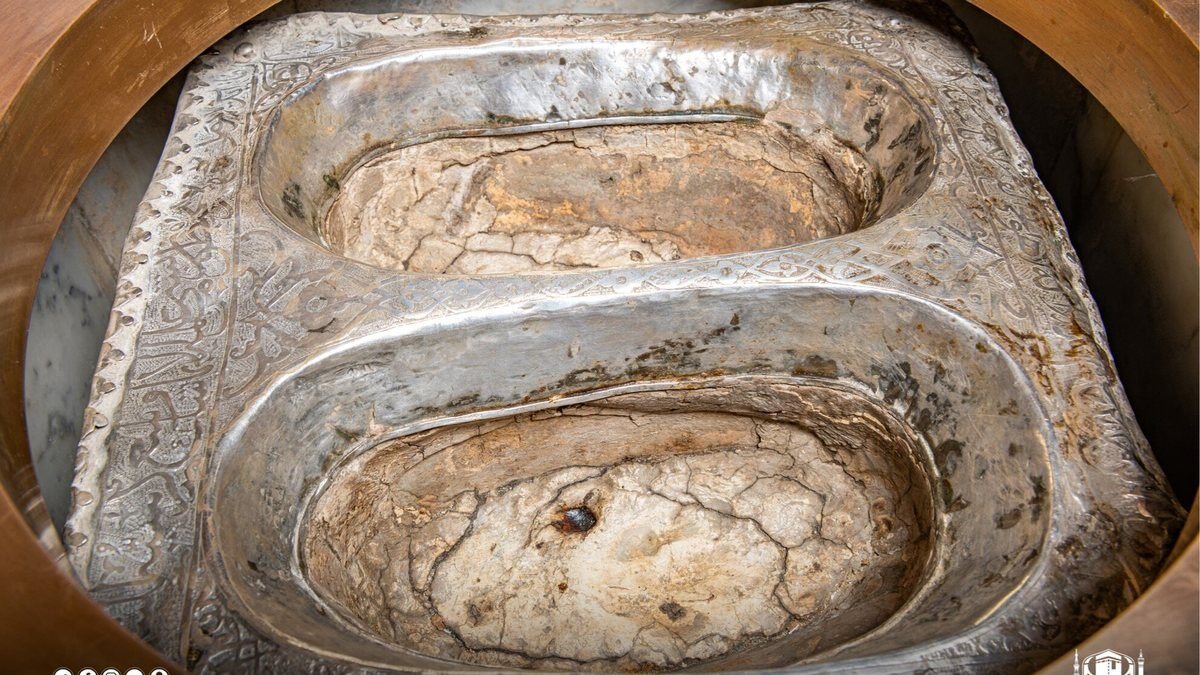
Hajar al-Aswad sits in the eastern corner of the Kaaba; a green light on the mosque wall marks the line where each circuit begins. Face the Stone, raise your right hand toward it and say “Bismillah, Allahu Akbar”. If you can reach it without pushing anyone, kiss or touch it; if not, pointing from a distance is a complete greeting (istilam) — the Prophet (peace be upon him) did exactly this while riding (Sahih al-Bukhari 1612). Do not fight the crowd to reach it: injuring others to kiss a stone is a mistake, not a virtue.
Tawaf is counter-clockwise, the Kaaba always on your left. Each circuit runs from the Black Stone line back to it. Men walk briskly with short steps (raml) in the first three circuits and at normal pace in the last four; women walk normally throughout. Stay outside the low semicircular wall (Hijr Isma’il) — passing through it does not count as circling the Kaaba. Count carefully; use your fingers or a counter, and let one family member keep the official count.
The booklets that assign a different long dua to each circuit are a later custom, not from the Sunnah. Recite Qur’an, make dhikr, ask for what you need in your own language. One supplication is narrated for the stretch between Rukn al-Yamani and the Black Stone: “Rabbana atina fid-dunya hasanatan wa fil-akhirati hasanatan wa qina ‘adhaban-nar” — Our Lord, give us good in this world and good in the Hereafter and protect us from the punishment of the Fire (Qur’an 2:201; Sunan Abi Dawud 1892). Touch Rukn al-Yamani with the right hand if you can reach it without pushing; it is not kissed and not pointed to from afar.
Cover the right shoulder again. Pray two units, ideally behind Maqam Ibrahim (Qur’an 2:125) — in practice, anywhere in the mosque from which you can see it, or anywhere at all when it is crowded. The Sunnah is to recite Surah al-Kafirun in the first rak’ah and Surah al-Ikhlas in the second (Sahih Muslim 1218). Then drink Zamzam — coolers are everywhere — and, if it is easy, return to greet the Black Stone once more before Sa’i.
Step 3: Sa’i — Seven Laps Between Safa and Marwah
Sa’i is seven laps between the hills of Safa and Marwah, starting at Safa and finishing at Marwah, performed after Tawaf. Sa’i re-enacts Hajar’s search for water for her infant son Isma’il. The two hills are now enclosed in an air-conditioned gallery inside the mosque (the Mas’a), on several levels. One lap is Safa to Marwah; the return is a second lap. Seven laps therefore start at Safa and finish at Marwah.
As you near Safa, recite: “Inna as-Safa wal-Marwata min sha’a’irillah” — Indeed, Safa and Marwah are among the symbols of Allah (Qur’an 2:158) — and say, as the Prophet (peace be upon him) did, “Abda’u bima bada’allahu bihi” — I begin with what Allah began with (Sahih Muslim 1218). Say the verse only at the start, not on every lap.
Climb as far up Safa as is comfortable, face the Kaaba, raise your hands and say “Allahu Akbar” three times, then: “La ilaha illallahu wahdahu la sharika lah, lahul-mulku wa lahul-hamd, wa huwa ‘ala kulli shay’in qadir. La ilaha illallahu wahdah, anjaza wa’dah, wa nasara ‘abdah, wa hazamal-ahzaba wahdah” — There is no god but Allah alone, without partner; His is the dominion and His is the praise, and He is able to do all things. There is no god but Allah alone; He fulfilled His promise, gave victory to His servant and defeated the confederates alone. Make personal dua, then repeat the sequence three times (Sahih Muslim 1218). You will do the same on Marwah at the end of each lap.
Walk at a normal pace, making dhikr and dua freely — again, there are no fixed words for the laps. A short section marked by two green lights on the walls is where men move at a light jog; women walk the whole way. Arriving at Marwah completes lap one. Face the Kaaba, repeat the dhikr and dua, and return to Safa for lap two.
Count aloud with your family: one at Marwah, two at Safa, three at Marwah … seven ends at Marwah. Wudu is recommended for Sa’i but not required, so if your wudu breaks during Sa’i you may continue. If you tire, resting on a bench between laps does not break Sa’i. Wheelchairs (with or without a pusher) and electric carts are available in the Mas’a and the mosque for the elderly and unwell; using one is fully valid.
Step 4: Halq or Taqsir — Ending the Ihram
Halq (shaving the head) or Taqsir (trimming the hair) is the act that ends your Ihram: men shave or trim the whole head, women trim a fingertip’s length. This final act is the one first-timers most often get wrong in the rush of relief. Do it properly and your Umrah is complete.
- Men: shave the whole head (halq) or trim all around (taqsir). Shaving is better; the Prophet (peace be upon him) prayed three times for mercy on those who shave and once for those who trim (Sahih al-Bukhari 1727; Sahih Muslim 1301). If you trim, trim from the whole head — not a token snip from one spot. The Hanafi school requires at least a quarter of the head; the other schools require the whole head. Licensed barbershops line the streets outside the Marwah exit and charge a small fee; carry your own new disposable razor if you prefer.
- Women: trim a fingertip’s length (about 1–2 cm) from the ends of the hair, gathered together. A woman never shaves. She may do this privately in the mosque or at the hotel, with her mahram or another woman cutting.
- Then you are out of Ihram. Every restriction lifts: normal clothes, perfume, nails, everything. Say Alhamdulillah — your Umrah is accepted, by Allah’s will.
After Your Umrah
Tawaf al-Wada’ (the farewell Tawaf) is a Hajj obligation, not an Umrah one. Most scholars consider it recommended, not required, after Umrah — and it is a beautiful way to leave Makkah, so our groups make time for it before the coach to the airport. Additional Umrahs during the same stay, entering Ihram from Masjid Aisha at Tan’im (the nearest Miqat boundary), are permitted by most scholars — Aisha herself performed Umrah from there on the Prophet’s instruction (Sahih al-Bukhari 1784) — though some, particularly in the Maliki school, consider repeating Umrah within one journey disliked. Ask your imam before planning one. Umrah on behalf of someone else (a deceased or permanently incapable parent, for instance) is permitted by the majority once you have performed your own Umrah first.
And the rest of your days in Makkah are simply worship: prayers in the Haram, Qur’an, voluntary Tawaf in ordinary clothes at any hour, and guided ziyarah of the historical sites. The Prophet (peace be upon him) said that Umrah in Ramadan is equivalent to a Hajj (Sahih al-Bukhari 1782; Sahih Muslim 1256) — which is why our Ramadan departures fill earliest.
Eight Mistakes First-Timers Make (and How to Avoid Them)
These eight mistakes account for most of the questions our imams answer on Umrah night, and every one of them has a simple prevention.
- Crossing the Miqat without Ihram because Makkah was the first stop and no one explained the plane rule. Read the Miqat table above twice.
- Reciting the Talbiyah in the coach but forgetting the intention. Words follow intention; make the niyyah consciously at the Miqat.
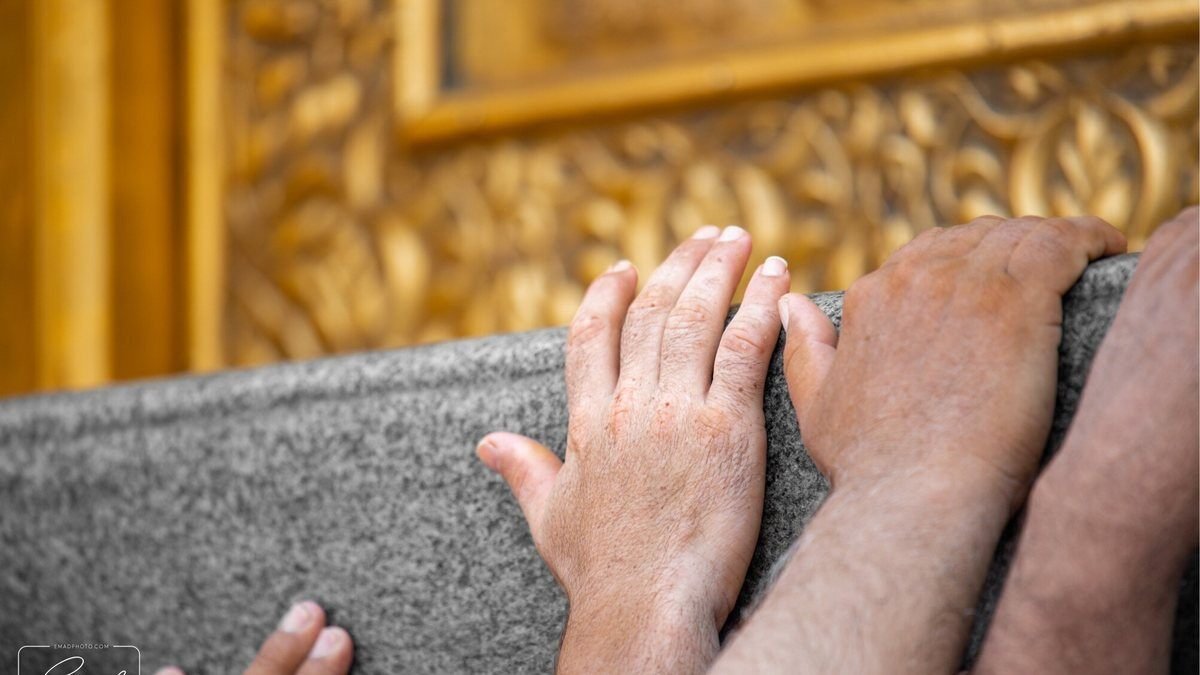
- Pushing toward the Black Stone. Pointing from afar is Sunnah; hurting another Muslim is not.
- Passing through Hijr Isma’il during Tawaf. That circuit does not count. Stay outside the semicircle.
- Losing count. Assign one counter per family and agree beforehand that when in doubt you repeat the doubtful circuit, not skip it.
- Reading dua from a phone for seven circuits and never looking at the Kaaba. Speak to your Lord in your own words.
- Trimming one lock of hair and calling it Taqsir. Trim from all around, or shave.
- Changing into normal clothes at the hotel “to rest” before the haircut. You are still in Ihram until Step 4. Finish first, then rest.
How This Works in a Hisar Tour Group
Every Hisar Tour Umrah group travels with a qualified imam who leads the Umrah itself. Before departure, our pre-Umrah webinars walk through exactly this sequence; the night before the Miqat, the imam repeats it in the hotel with the sheets in hand. On the day, the whole group is on Bluetooth headsets, so a father holding a child’s hand in the third circuit hears “this is the Yamani corner — touch it if you can, otherwise keep walking” at the moment he needs it. Elderly parents are matched with wheelchairs and a pusher before we leave the hotel, women in the group have a discreet channel for the questions they would rather not ask a man, and anyone who is unsure about a rule asks the imam standing next to them rather than a stranger online. That is the difference between reading a guide and being guided — and it is what our travelers mention most in their reviews.
Perform your first Umrah with an imam beside you
Our departures from New York, Washington, Los Angeles and Toronto include guided Umrah, pre-departure webinars, hotels within walking distance of the Haram, and breakfast and dinner every day.
See Umrah Packages WhatsApp +1 201-201-8992A UAMA community organization · Imam-led groups since our first departures
Continue with what your first Umrah trip looks like day by day, our answers to the questions US and Canadian pilgrims ask most, the packing list, and the detailed Shafi’i–Hanafi comparison if you follow a particular school closely.
Frequently Asked Questions
How long does it take to perform Umrah?
The rituals themselves usually take two to four hours: Tawaf 45–90 minutes, the two rak’ahs and Zamzam 10–15 minutes, Sa’i 45–60 minutes, and the haircut 10–20 minutes, all depending on the crowd and which floor you use. Add travel time from your Miqat; a Madinah-first group spends most of a day on the move to Makkah. For the quieter hours, see when Tawaf is least crowded.
Is Sa’i mandatory in Umrah?
Yes. It is a pillar of Umrah in the Shafi’i, Maliki and Hanbali schools and an obligation (wajib) in the Hanafi school, where omitting it requires a compensatory sacrifice. No school considers it optional. Those unable to walk perform it in a wheelchair or electric cart.
Can a woman perform Umrah while menstruating?
She enters Ihram, says the Talbiyah and does everything except Tawaf, which requires purity. She waits in Ihram until she is pure, then performs Tawaf, Sa’i and trims her hair. If the schedule makes waiting impossible, she should consult the group imam early about the scholarly options.
Do I need wudu for Sa’i?
No. Wudu is required for Tawaf but only recommended for Sa’i. If your wudu breaks during Sa’i, you may continue and complete it.
Are there specific duas for each circuit of Tawaf?
No. No authentic narration assigns a dua to each circuit; the booklets that do so reflect later custom. Recite Qur’an, make dhikr and ask in your own words. The one narrated supplication is “Rabbana atina fid-dunya hasanah…” between Rukn al-Yamani and the Black Stone.
Can I perform Umrah more than once on the same trip?
Most scholars permit it: you enter Ihram at Masjid Aisha in Tan’im and repeat the four acts. Some scholars, notably in the Maliki school, consider repeated Umrahs within one journey disliked. Ask your group imam, and prioritize your obligatory prayers in the Haram over racking up a count.
Is Tawaf al-Wada’ required after Umrah?
No. The farewell Tawaf is an obligation of Hajj, not Umrah; after Umrah it is recommended by most scholars. It is a beautiful way to leave Makkah, and organized groups usually schedule time for it before departure.
What if I break a rule of Ihram by mistake?
Forgetfulness and genuine ignorance carry no sin. Whether any compensation is owed depends on the act and the school of law — some acts require nothing, others a charity or sacrifice. Do not leave Ihram; tell your imam what happened and follow his instruction.
*Durations are estimates that depend on crowd levels, season and which level of the mosque you use. Rulings are summarized from the four Sunni schools; where they differ, each position is stated. Hadith references are to Sahih al-Bukhari, Sahih Muslim and Sunan Abi Dawud by hadith number. For your personal situation, ask your group imam. Last reviewed: September 2026.
Sources: Sahih al-Bukhari 1549 (Talbiyah) · Sahih al-Bukhari 1524 (the Miqats) · Sahih Muslim 1218 (the Prophet’s Hajj, Jabir) · Sahih al-Bukhari 1838 (women in Ihram) · Qur’an 2:158 · Nusuk (Umrah permits) · Saudi Ministry of Hajj & Umrah.