
An imam travelling with your group changes three things: your rites are checked as you perform them, your questions are answered in your own school, and the ziyarah sites are taught rather than toured.
It does not change the Umrah itself, which any Muslim can perform correctly with good preparation. What it changes is how much you have to carry alone. When pilgrims review their trips, the guide is one of the things they write about most, and when guidance goes wrong it is one of the things they complain about. This page explains what an imam-led group actually does, what it costs you in flexibility, and what to ask any operator before you book, including us.
We are an operator that sends every Umrah group with an imam, so we are not neutral on this question. We have tried to write the page so that it is still useful if you decide to travel another way. If you already know you want a guided group, the departures on our Umrah packages page each name the imam travelling with that group.
What Pilgrims Write About Their Guides
In our internal August 2026 audit of 2,600+ public Google reviews across nine US operators, we sorted the written comments by theme. The imam or group guide was the fourth most common theme across the whole market, mentioned in 15.7% of the reviews that had written comments. Only organisation, hotels and first-timer experiences came up more often. The wider findings are in what pilgrim reviews teach about Hajj and Umrah.

Two other figures from the same audit are worth stating plainly, with the caveat that they are about us. In reviews of Hisar Tour, the imam or guide came up 96 times, close to half of our own written reviews. And across the market, the theme turned up 14 times in reviews of three stars or fewer. We read that as two sides of one finding: guidance is what pilgrims remember, for better or worse. An audit of reviews measures what people chose to write about, not the quality of anyone’s religious instruction, so treat these numbers as a signal of what matters to pilgrims rather than a ranking.
During the Rites
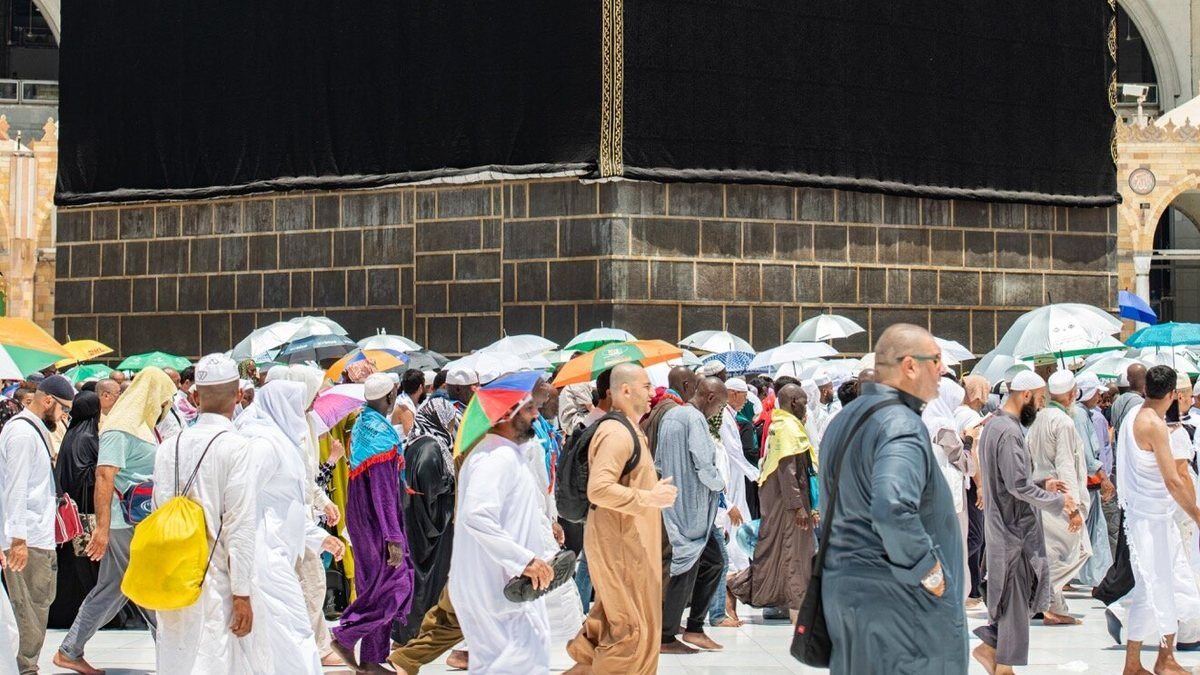
Most first-time pilgrims arrive having watched videos and read a guide, and most still feel unsure the moment they enter the mataf. The value of an imam here is very practical. He leads the group through Tawaf and Sa‘i in person, explains each stage as it happens, and catches mistakes while they can still be corrected: starting a circuit from the wrong point, losing count, or leaving ihram before the hair is cut. Our Umrah packages page describes our imams leading Tawaf step by step and confirming that the Halq or Taqsir is done correctly before pilgrims leave ihram.
In a crowd, being heard is half of it. Hisar groups use Bluetooth headsets so the imam’s voice reaches every pilgrim without shouting, which also means families can walk at slightly different paces and still follow the same guidance.
If you would rather prepare thoroughly and go independently, our guide to common Umrah mistakes lists the errors an imam would usually catch, so you can watch for them yourself.
Questions, in Your Own Madhhab
Pilgrims ask a lot of fiqh questions on an Umrah trip, and many arise at awkward moments: a woman’s period starting before Tawaf, a dropped hair while in ihram, a missed prayer in transit, a parent who cannot complete Sa‘i on foot. Answers differ between the schools, and an answer from the wrong school can leave someone worrying for years about whether their Umrah counted.
An imam who travels with the group can answer on the spot and in the pilgrim’s own madhhab, or say plainly that he will find out. Hisar’s published approach is that its imams advise each traveller according to their own school, or connect them with the right scholar. For background on how the two largest schools in North America differ in practice, see differences between the Shafi‘i and Hanafi schools.
At the Ziyarah Sites
The difference between a guided and an unguided ziyarah morning is the difference between seeing a hill and understanding Uhud. At Quba, a guide can tell you why the Prophet ﷺ went there and what the hadith promises the one who prays there. At Jabal al-Rahmah, he can tell you that climbing it is not part of any rite. At a cemetery, he can lead the greeting and the du‘a. He can also say, kindly, when a practice you see others doing has no source.
Our two guides to ziyarat places in Madinah and ziyarat places in Makkah cover the sites themselves, and our Jannat al-Mu‘alla guide covers grave-visit etiquette and where the schools differ.
Care for Parents and First-Timers
For families travelling with older parents, the imam can matter as much as a steady presence as a teacher: someone who knows the parents by name, notices when one is tired, and adjusts the pace. A guidebook cannot do that. Our guide to Umrah with elderly parents covers the practical side, and your first Umrah, day by day sets out what a first-timer can expect.
The other quiet benefit is one voice. Group trips go wrong when instructions come from three different people. Hisar’s practice, as described on our site, is one written daily brief from one source, so the time for tomorrow’s ziyarah does not depend on who you happened to ask.
The Honest Downside
- The group sets the pace. Departure times for ziyarah, meals and transfers are fixed. If you want to spend a whole night in the Haram and sleep through the morning programme, you can, but the bus will not wait.
- The imam’s attention is shared. He is serving everyone in the group. If you need long one-to-one study, arrange it before you travel.
- A group package usually costs more than booking flights, a visa and hotels yourself. Part of what you pay for is the guidance and the organisation around it. Whether that is worth it depends on your experience and who you are travelling with.
- The guide is only as good as the person. “Imam-led” on a website means little until you know who the imam is.
Experienced pilgrims who are confident in their fiqh, speak some Arabic and travel without dependants often do well on their own. For first-timers, families with children and anyone travelling with older parents, the balance usually tips the other way.
Seven Questions to Ask Any Operator
An operator that answers all seven in writing before you pay is showing you the thing you are buying. Our checklist of twelve questions to ask before you pay covers the rest of the contract.
Who Leads Hisar Groups
Hisar Tour is owned by UAMA, the United American Muslim Association, and our imams are mostly imams of community mosques in North America. Our About Us page names the group imams, including:
- Selman Faruk Özat, head imam of Hamidiye Mosque, Rochester, New York
- Talha Akkaya, head imam of Fatih Mosque, Brooklyn, New York
- Hüseyin Onut, head imam of the UCMA Mosque, Vancouver
- Bilal Basheer Aygün, head imam of MYCP, Philadelphia
Other imams and group leaders join according to the season and departure city, and each departure card on our Umrah packages page names the imam for that group. Groups are led in English, with Turkish also supported. Answer the seven questions above about us as strictly as about anyone; we would rather you checked than took our word for it.
Choose a departure and see who is leading it
Every Umrah departure lists its imam, hotels, nights in each city and what is included. Ask us anything on the list above before you book.
View Umrah packages WhatsApp +1 201-201-8992A UAMA community organization
Do I need an imam to perform Umrah?
No. Umrah is valid without a guide if you perform its rites correctly, and many pilgrims go independently. An imam helps you do them correctly with less worry, answers questions in your own school and teaches at the ziyarah sites.
What does an imam do on an Umrah group trip?
He leads the group through Tawaf and Sa‘i, explains each step, checks that ihram is ended correctly, answers fiqh questions, leads and teaches the ziyarah visits in Makkah and Madinah, and supports pilgrims who are struggling, especially older travellers.
Is an imam-led Umrah group more expensive?
Usually more than booking flights, a visa and hotels yourself, because the package includes guidance, transfers and organisation. Compare what is included, not only the price; our Umrah packages page lists the inclusions for each departure.
Will the imam follow my madhhab?
Ask the operator directly. At Hisar, imams advise each pilgrim according to their own school or refer them to an appropriate scholar, and groups include pilgrims from different madhhabs.
Is there a female guide for women?
On most Hisar Umrah departures a female religious guide travels with the group to support sisters. Ask which departures include one before you book.
Review figures come from our internal August 2026 audit of 2,600+ public Google reviews across nine US operators; percentages refer to reviews with written comments, themes were coded by our team, and no individual reviews or companies are quoted or named. Imam names and roles are as published on hisartour.com on 9 October 2026 and can change by season. Nothing here is a religious ruling; ask your own scholar about your situation. Last reviewed: October 2026.
Sources: Hisar Tour, About Us (group imams, female guide) · Hisar Tour, Umrah packages and FAQ (inclusions, headsets, daily brief)