
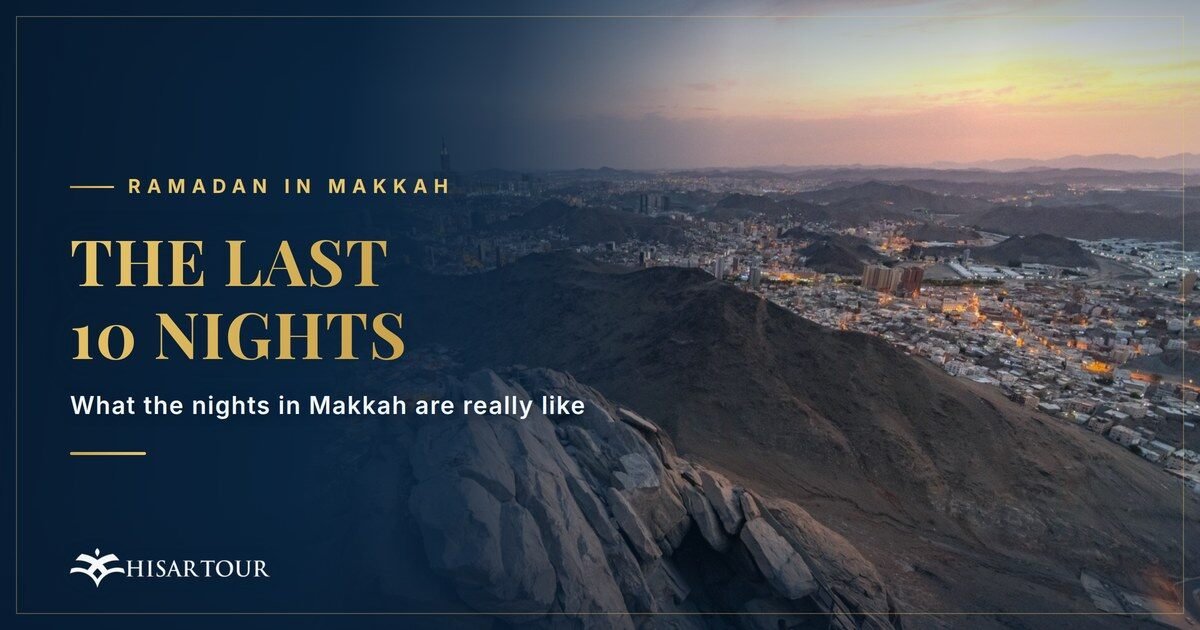
The last ten nights in Makkah are the most crowded nights of the Islamic year: long prayers after Isha, a second prayer after midnight, then suhoor and Fajr, with millions in the Grand Mosque on the 27th and 29th nights.
In 2027 they are expected to begin at sunset on Saturday, February 27. This is a practical guide to what the nights look like, where you will actually pray, and how to pace yourself so you still have strength on the nights that matter most.
27th night · ~Mar 5*
Eid al-Fitr · ~Mar 9*
If you are planning to be in Makkah for the end of Ramadan, most of what you will read online is either devotional or generic. Both matter, but neither tells you when to leave your hotel, what you can carry into the mosque, or how an elderly parent gets through a 27th night. This guide keeps the two apart: first why these nights matter, then what happens on the ground.
Why the Last Ten Nights Matter
The last ten nights are when Muslims seek Laylat al-Qadr, the Night of Decree. The Qur’an says it “is better than a thousand months” (Qur’an 97:3). The Prophet ﷺ told us to seek it “in the odd nights of the last ten days of Ramadan” (Sahih al-Bukhari 2017).
He also changed his own routine in these nights. Aisha (may Allah be pleased with her) described how, with the start of the last ten days, he “used to pray all the night, and used to keep his family awake for the prayers” (Sahih al-Bukhari 2024). When she asked what to say if she knew it was Laylat al-Qadr, he taught her: “O Allah, You are Pardoning, You love pardon, so pardon me” (Jami’ at-Tirmidhi 3513).
None of this requires being in Makkah. These nights carry the same virtue in a masjid in New Jersey or Toronto. Being in the Haram adds the Kaaba in front of you and a congregation from every corner of the world. It also brings crowds and fatigue that you have to plan for.
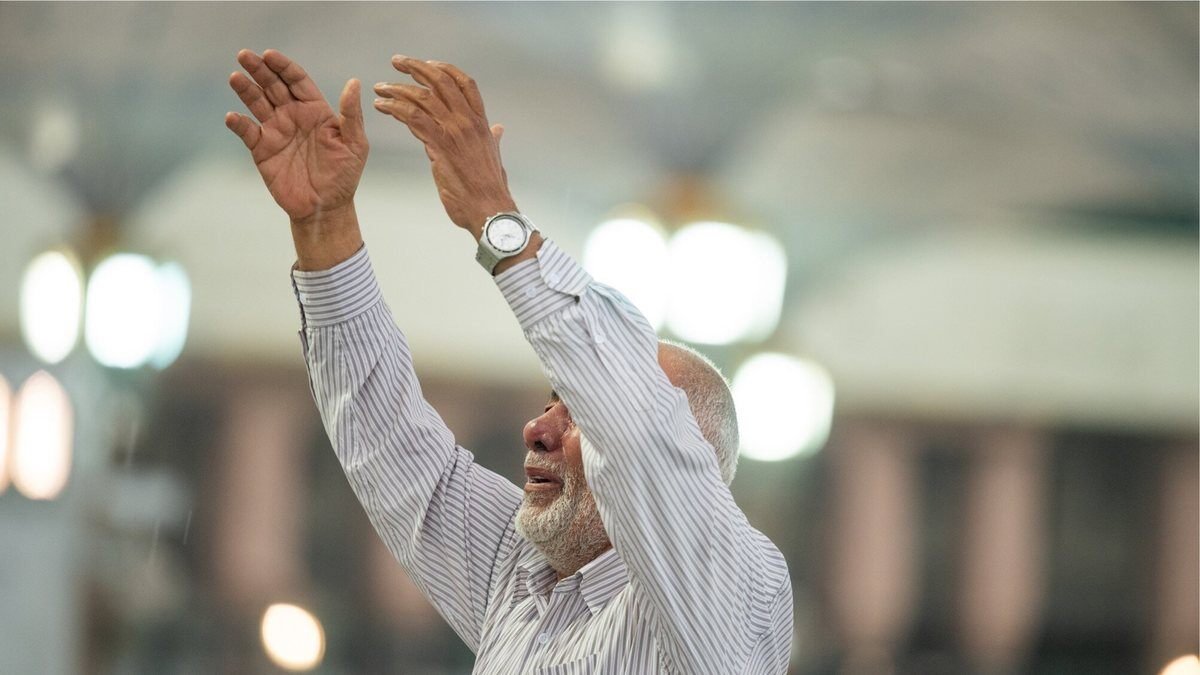
The Shape of a Night, Hour by Hour
Exact prayer times shift a few minutes each day, and the Grand Mosque announces the time of the late-night prayer each season. The order of the night stays the same:
- Late afternoon. The best time to walk in. Many people pray Asr in the mosque and stay. Carry only what is allowed: the Grand Mosque gates department bans large bags and luggage, and lets in food only as “coffee, dates, and water.”
- Maghrib and iftar. Many people break their fast inside the mosque with dates, water and Zamzam, and Maghrib follows within minutes. The areas around you fill quickly at this time.
- Isha and Taraweeh. The longest block of the evening. Isha is followed by Taraweeh prayed behind the imams of the Grand Mosque.
- The gap. A few hours between Taraweeh and the late-night prayer. This is the time to eat a proper meal, rest, or perform your Umrah if you have not yet.
- Tahajjud (Qiyam al-Layl). A second congregational prayer after midnight, held from the 21st night to the end of the month. The start time is set each year. In 1445, for example, the Prophet’s Mosque announced 12:30 am.
- Suhoor and Fajr. Eat before the Fajr adhan, then pray Fajr. Most people sleep through the morning.
The 27th Night and the Khatm
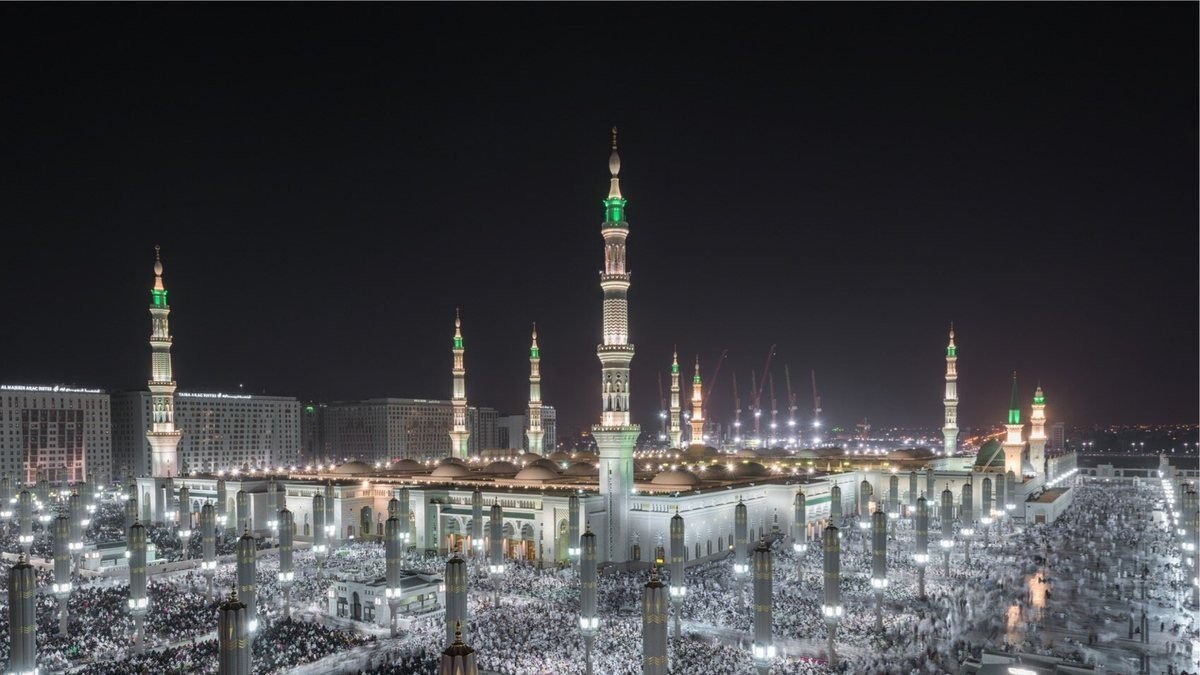
No one knows which night is Laylat al-Qadr, but the 27th night draws the largest crowd. On the 27th night of Ramadan 1446 (2025), the Grand Mosque received more than 4.2 million worshippers (Arab News). On the same night in 1447, the Saudi Press Agency reported that “corridors, floors, rooftops, courtyards, basements, and the Third Saudi Expansion were filled.”
The completion of the Qur’an in the night prayer, the Khatm, usually falls near the end of the month, often around the 29th night. It is one of the most emotional prayers of the year, and one of the most crowded.
For these two nights, arrive earlier than you think you need to, and agree in advance where your group will meet afterward. Phone networks can slow down when millions of people are in one place.
Where You Will Actually Pray
On a busy night you pray where there is space, not where you planned. When the ground floor and main halls fill, security staff direct people to the upper floors, the roof, the courtyards and the expansion areas. A few practical points:
- The Mataf ground floor is for Umrah. In Ramadan 1447 it was reserved for people performing Umrah. Extra Tawaf on these nights usually means an upper level, where each circuit is longer.
- Do not settle in walkways. Ministry guidance asks worshippers to avoid lying down or sleeping in corridors, prayer areas, emergency routes and paths kept for wheelchairs. Keeping them clear keeps everyone moving safely.
- Pick a numbered gate as your meeting point. Every gate has a number and a name. “Near the clock tower” is not a meeting point.
- Know where help is. The Guest Care centers inside both Holy Mosques help lost women and children around the clock, and children’s ID wristbands are handed out at the entrances.
Pacing: How to Last Ten Nights
A common planning mistake is treating every night like the 27th. Staying in the mosque from Asr to Fajr on ten nights in a row leaves most people too tired to stand in prayer by the end. A realistic plan:
Plan to stay through Tahajjud on the odd nights, and go home after Taraweeh on the even nights. You still pray Tahajjud on the even nights, in your room or nearby.
Five or six hours after Fajr is not laziness; it is what keeps you standing at 1:00 am. Ask your hotel about quiet hours and blackout curtains.
The Saudi Ministry of Health advises drinking enough water and avoiding long walks under direct sun. In Ramadan, all of that drinking happens at night. Keep a bottle with you from Maghrib onward.
For elderly parents, a hotel within a short walk of the Haram matters more than any other feature. Our guide to Makkah hotels and what walking distance really means gives honest minutes at prayer times.
Nights in late February and early March are mild. Average lows in Makkah are close to 68°F, so a light layer is enough. In Madinah, lows are nearer 57°F.
I’tikaf for Visitors
I’tikaf, staying in the mosque for worship, is a sunnah of the last ten days. Aisha reported that the Prophet ﷺ “used to practice I’tikaf in the last ten days of Ramadan till he died” (Sahih al-Bukhari 2026).
The Saudi arrangement is separate from the religious practice. In Ramadan 1447, official i’tikaf places in the Grand Mosque were registered through the General Authority’s e-services with a Nafath login. The 2025 conditions required applicants to be 18 or older and a Saudi citizen or resident. A visitor on an Umrah visa should assume there is no registered place for them unless the 1448 rules change.
Scholars of the four schools differ on the minimum length of i’tikaf. Some accept a short stay with the intention of i’tikaf; others set a longer minimum. Ask your imam which view he follows before you rely on it.
Eid al-Fitr in Makkah
Eid al-Fitr 1448 is expected on Tuesday, March 9, 2027. In 2025, Saudi Arabia set the Eid prayer at 15 minutes after sunrise in all regions. For the Grand Mosque that means one thing: stay after Fajr, or return very early. The streets around the Haram are full well before sunrise.
Pay zakat al-fitr before the Eid prayer. The Prophet ﷺ ordered that it be paid “before the people went out to offer the Eid prayer” (Sahih al-Bukhari 1503). The schools differ on how early it may be paid. Ask your imam, and if you are traveling, arrange it in advance so it is not forgotten in the rush.
Makkah or Madinah for the Last Ten Nights?
Most people who plan for the last ten nights choose Makkah. Madinah is the quieter alternative: the Prophet’s Mosque also holds Tahajjud in the last ten nights, the walk from most central-area hotels is short, and the night air is cooler. The trade-off is the Rawdah: in Ramadan 1447, women’s Rawdah slots in the last ten days ran only 6:00–11:00 am. If you are weighing the order of your cities, read Makkah or Madinah first and our guide to Madinah hotels and the central area.
For dates, booking windows and the Saudi rules that apply only in Ramadan, see our Ramadan Umrah 2027 planning guide.
Spend the last ten nights in Makkah with a group
Travel with an imam, a hotel within walking distance and a plan for every night. See our Ramadan departures or ask us about dates.
See Ramadan Umrah Packages
WhatsApp +1 201-201-8992
Hisar Tour · A UAMA community organization · hisartour@uama.us
Common Questions
What time is Tahajjud in the Grand Mosque in the last ten nights?
It is held after midnight from the 21st night to the end of Ramadan. The exact time is announced each season, so check it when you arrive.
Can women pray in the Grand Mosque on the 27th night?
Yes. Women pray in the women’s sections and on the upper floors and courtyards. On the busiest nights, arrive early and agree on a meeting gate with your family before you separate.
Can I take my children to the Haram in the last ten nights?
Yes, but plan for crowds. Get a children’s ID wristband at the entrance and choose the less crowded nights for young children.
Do I have to be in Makkah to get the reward of Laylat al-Qadr?
No. The virtue of the night is not tied to a place. Being in the Haram is a blessing, but the night can be sought wherever you are.
*Gregorian dates for Ramadan 1448 are expected dates based on the Umm al-Qura calendar and depend on moon sighting. Saudi arrangements described here come from the 1445–1447 seasons and are reissued each year. Last reviewed: September 2026.
Sources: Qur’an 97 (al-Qadr) · Sahih al-Bukhari 2017 · Sahih al-Bukhari 2024 · Sahih al-Bukhari 2026 · Sahih al-Bukhari 1503 · Jami’ at-Tirmidhi 3513 · SPA, 27th night 1447 · Arab News, 27th night 1446 · SPA, Ramadan 1446 figures · SPA, Mataf arrangements 1447 · SPA, i’tikaf 1447 · SPA, Rawdah hours 1447 · SPA, Tahajjud at the Prophet’s Mosque 1445 · SPA, Guest Care centers · SPA, Eid prayer time 1446 · Saudi Gazette, Ministry guidance on corridors · Gulf News, Grand Mosque bag rules