
Eight weeks is enough to prepare for a first Umrah from the US or Canada, if you do things in the right order: book, sort the visa, see a doctor, get the meningococcal vaccine, learn the rites, then pack and confirm.
Only one deadline on this plan is fixed by a Saudi rule rather than by common sense: the meningococcal ACYW vaccine must be given at least 10 days before you arrive. Everything else has slack, which is exactly why it tends to pile up in the last week. Count back from your arrival date and use the plan below.
This plan is written for someone flying from North America for a week or ten days, either with a group or independently. If you have not chosen dates yet, start with our Umrah packages page, which lists the current departures, hotels and what each one includes. If you are reading this in mid-November, eight weeks from now is mid-January; Ramadan 1448 is expected to begin around 8 February 2027 (Umm al-Qura calendar, subject to the moon sighting), and that changes crowds and prices.
The Plan at a Glance
Each week has one main job. The order matters more than the exact week: you cannot apply for a visa before you know your dates, and you cannot learn the rites calmly once you are packing.

Week 8: Decide and Book
The first decision is whether you are travelling with a group or arranging everything yourself. A group fixes your dates, hotels and transfers in one contract; going independently gives you flexibility but makes every later step on this list your own job. Either way, compare what is included rather than the headline price: our guide to what a quality Umrah package includes lists what to look for.
- Dates. Fix your arrival date first; it drives the vaccine deadline and the visa timing.
- Makkah or Madinah first. It changes where you enter Ihram and how the first days feel. Our page on Makkah or Madinah first sets out the differences.
- Passport. Check the expiry date of every passport in the family now, against the validity the visa application asks for. Renewals take longer than visas.
- Budget. Agree it at home, including spending money and anything not in the package.
Week 7: Choose Your Visa Route
US and Canadian travellers have two common routes, and they are not the same thing.
- The official portal describes it as a one-year, multiple-entry visa allowing up to 90 days in the country.
- It covers tourism activities including Umrah, and excludes Hajj.
- Applied for online at visa.visitsaudi.com.
- Launched by the Ministry of Hajj and Umrah in July 2026: valid 365 days, up to 90 days’ total stay.
- Each visit requires a service package from an approved provider on Nusuk.
- Entry also requires an Umrah permit issued in the Nusuk app before arrival.
Whichever route you use, create your Nusuk account early: Umrah permits are issued through the Nusuk app. If you are travelling with a group, ask who applies for what; on many packages, including ours, visa processing is part of the service, but you should still know which visa you hold. Our comparison of Saudi visa types goes into the differences.
Weeks 6 and 5: Doctor, Medicines, Vaccine
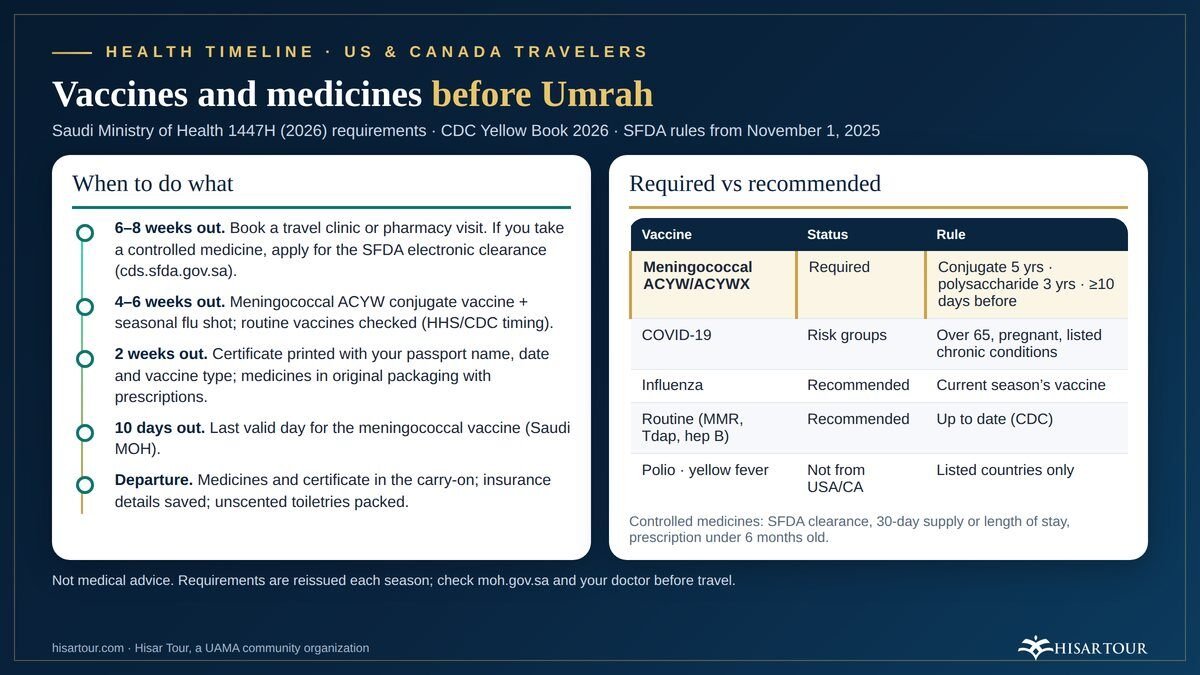
Book a travel clinic or doctor’s appointment in week six. Bring a list of every medicine you take, with doses, and ask about the vaccines below. Our Umrah health preparation guide covers the medical side in more depth; this is the timing.
Controlled medicines. If any of your medicines is controlled in Saudi Arabia, the Saudi Food and Drug Authority runs a Controlled Drug System with a clearance process for travellers. Its traveller guide describes creating a traveller account, requesting a clearance, entering your flight details, and attaching your ID, a photo of the medicine and the prescription or medical report. Ask your doctor or pharmacist whether any of your medicines might fall into this category, then check before you fly rather than at the airport.
Week five is also a good week for the inner side of preparation: settling debts, apologies that are owed, and a written will. Our spiritual preparation checklist covers those, each with its source.
Week 4: Learn the Rites
Umrah has four parts: entering Ihram with the intention, Tawaf (seven circuits of the Kaaba), Sa’i (seven lengths between Safa and Marwah), and shaving or shortening the hair. Learn them in that order, then learn what is restricted while you are in Ihram; our Ihram rules guide explains it for men and women. If you are flying straight to Jeddah to start in Makkah, you will usually pass the Miqat in the air, so read where to enter Ihram on a flight from the US this week, not on the plane.
Then learn the few words with a fixed wording, starting with the Talbiyah. Our Umrah duas guide lists what to recite at each step, with its source, and says where there is no fixed dua.
Week 3: Walk It In
Tawaf and Sa’i are done on foot, often in crowds, and many pilgrims also walk to and from the Haram for each prayer. Start walking every day if you are not already, building up gradually, in the shoes or sandals you plan to wear there. Blistered feet are an avoidable way to lose the first days of the trip.
If anyone in your family may need a wheelchair for Tawaf or Sa’i, plan it now rather than on arrival, and tell your operator at booking. Our guide to Umrah with elderly parents covers pacing and mobility.
Weeks 2 and 1: Pack and Confirm
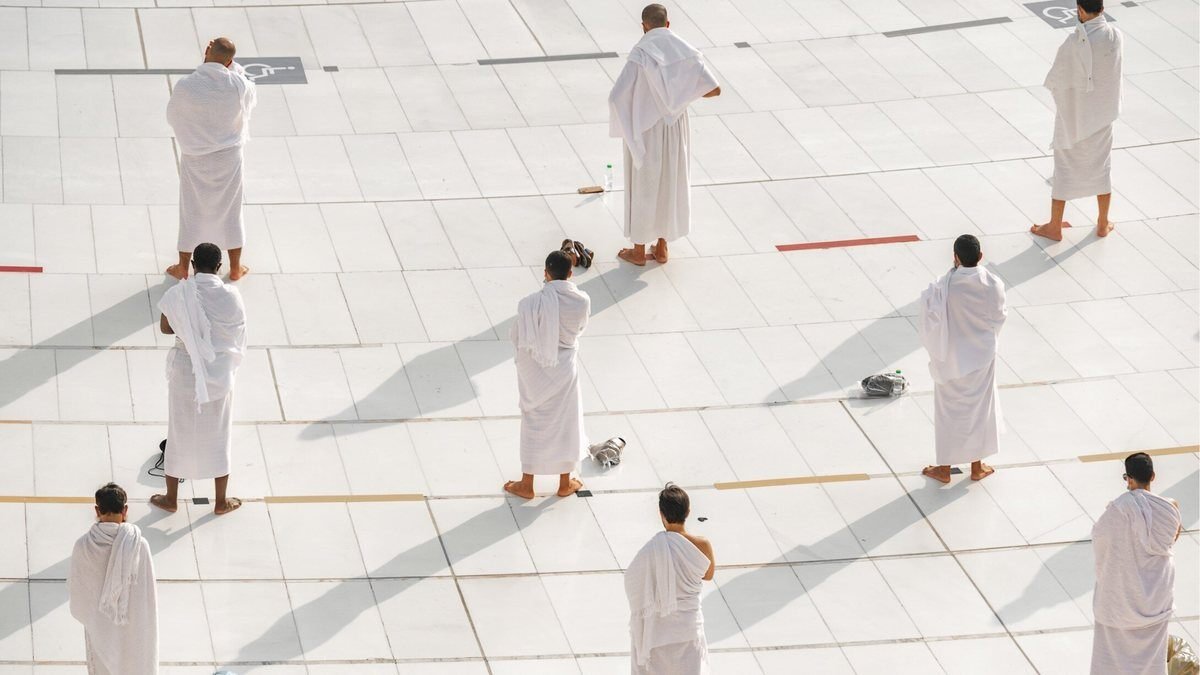
Pack from a list rather than from memory; our Umrah packing list from the USA is built for this trip. Three things matter more than the rest: Ihram clothing and unscented toiletries, medicines in their original packaging with the prescription, and printed copies of the documents you would not want to lose on a dead phone.
In the final week, confirm rather than add:
- Visa issued, and if your route requires it, the Umrah permit showing in your Nusuk app.
- Flight times, hotel names and the transfer plan from the airport.
- Vaccination certificate and medicine paperwork in your carry-on.
- Contacts and a copy of your itinerary left with family at home.
And on the last night, renew your intention. Our page on your first Umrah, day by day describes what happens after you land.
The Deadlines That Are Actually Fixed
Most of this plan is good practice. These are the items set by an official rule, with where the rule comes from. All of them can change between seasons, so check them again when you book.
| Requirement | The rule | Set by |
|---|---|---|
| Meningococcal ACYW vaccine | At least 10 days before arrival; conjugate within 5 years, polysaccharide within 3 | Saudi Ministry of Health (1447H) |
| Umrah permit | Issued through the Nusuk app; for the multiple-entry Umrah visa, before arrival | Ministry of Hajj and Umrah |
| Service package (Umrah visa route) | One per visit, from an approved provider on Nusuk | Ministry of Hajj and Umrah |
| Controlled medicines | Traveller clearance through the Controlled Drug System | Saudi Food and Drug Authority |
| Tourist eVisa scope | Includes Umrah, excludes Hajj; up to 90 days | visa.visitsaudi.com |
Swipe the table sideways to see every column.
Want the eight weeks to start from a confirmed date?
See current Umrah departures from the US and Canada, with hotels and inclusions for each, and ask us about the timing.
See Umrah departures WhatsApp +1 201-201-8992A UAMA community organization
How far in advance should I prepare for Umrah?
Eight weeks is comfortable for a first Umrah from North America. The only fixed health deadline is the meningococcal ACYW vaccine, at least 10 days before you arrive in Saudi Arabia, but the visa, medicine paperwork and learning the rites all go better with time to spare.
Can I do Umrah on a Saudi tourist visa?
The official visa portal says the tourist eVisa covers tourism activities including Umrah, and excludes Hajj. You will still need to book your Umrah permit through the Nusuk app. Check the current conditions on the portal when you apply.
Which vaccine do I need for Umrah?
The Saudi Ministry of Health requires a meningococcal ACYW vaccine for Umrah travellers from all countries: a conjugate vaccine within the last 5 years or a polysaccharide vaccine within the last 3 years, in both cases at least 10 days before arrival. Ask your doctor about other recommended vaccines.
Do I need permission to bring my medicines into Saudi Arabia?
For controlled medicines, the Saudi Food and Drug Authority runs a traveller clearance through its Controlled Drug System, which asks for your ID, a photo of the medicine and the prescription or medical report. Ask your doctor or pharmacist whether any of yours may be controlled, and carry all medicines in their original packaging.
Visa, permit and health rules are set by the Saudi authorities and are reissued or changed between seasons. The details above were read on the official pages and documents in November 2026; the Ministry of Health’s latest Umrah requirements document at that time was for 1447H. Check them again when you book and before you fly. Nothing here is medical advice: ask your own doctor. Last reviewed: November 2026.
Sources: Saudi Ministry of Health, health requirements for Umrah travellers 1447H · SFDA Controlled Drug System · Saudi tourist eVisa portal · SPA: multiple-entry Umrah visa · SPA: Umrah permits issued through the Nusuk app · CDC, travel to Saudi Arabia